
EU’s Aggressive Offensive Against U.S. Tech: The X Penalty and the Emerging Transatlantic Rift

Introduction
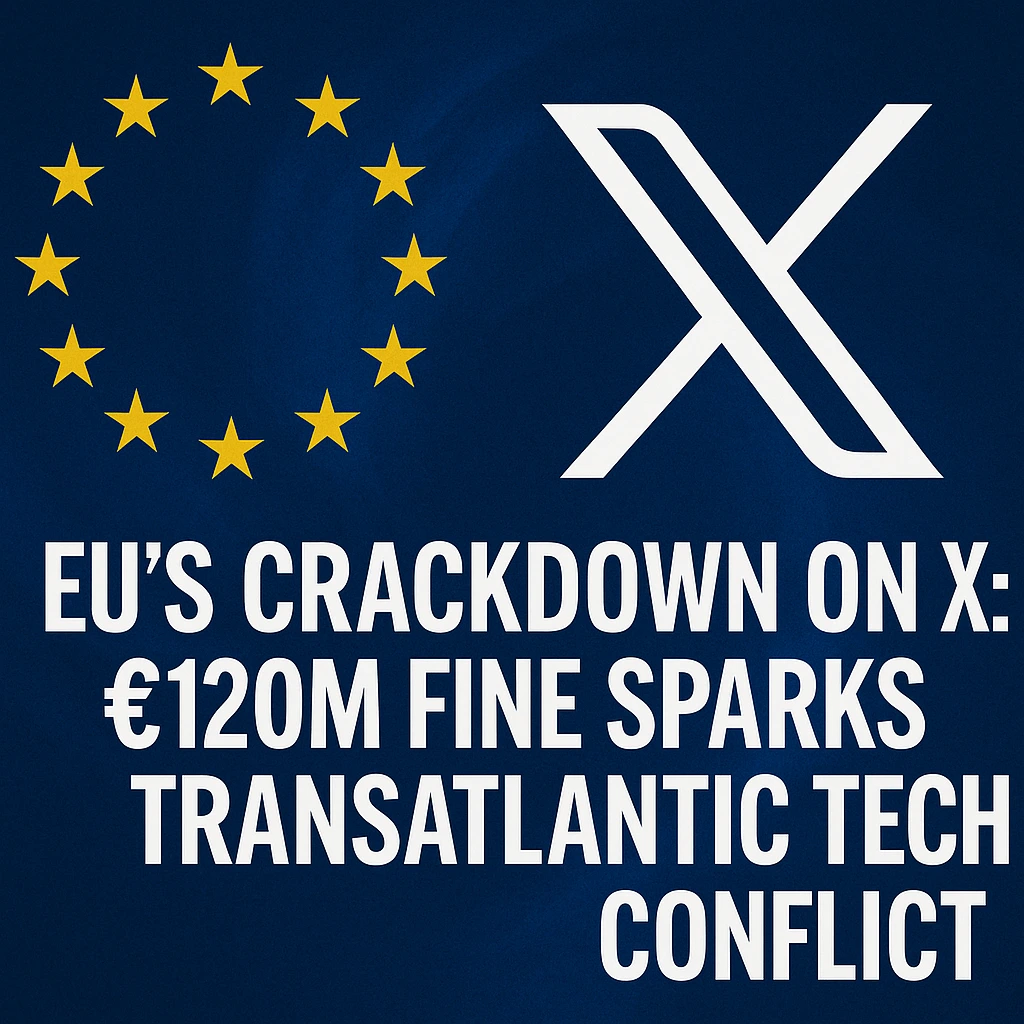
The European Union has launched yet another forceful regulatory attack on a major American tech company. This time, Elon Musk’s platform X faces a €120 million ($140 million) penalty under the Digital Services Act (DSA). The accusations—ranging from unclear verification practices to insufficient advertising transparency and restricted researcher access—are seen by critics as part of a broader EU campaign to restrain successful U.S. companies while failing to build competitive alternatives of its own.
According to the Scam-Or Project, which tracks global cyber-financial risks, this conflict is rapidly escalating into a geopolitical clash with possible ripple effects across digital markets and investment flows.
The EU’s Charges: A Strategic Move Disguised as Consumer Protection
Announced on December 5, 2025, the European Commission’s action alleges that X:
- Enabled misinformation by allowing its paid verification system to resemble authenticity markers
- Failed to clearly disclose the origins of advertisements, potentially concealing foreign propaganda
- Limited access for researchers attempting to investigate automated manipulation and influence networks
What the EU calls “consumer protection” is viewed by many analysts as a calculated effort to expand its censorial reach over online platforms. The bloc has repeatedly levied massive penalties against U.S. companies—Google, Apple, Meta—using GDPR, DMA, and now the DSA as enforcement weapons.
Despite this aggressive posture, the EU continues to contribute almost nothing to the global social media ecosystem. Initiatives such as the Digital Decade agenda and recent AI strategies have produced little more than bureaucratic frameworks without meaningful innovation.
Backlash from the U.S.: Musk and Policymakers Strike Back
Elon Musk immediately condemned the fine as “crazy” and “insane,” arguing—incorrectly—that the punishment targeted him personally. He called for the United States to impose countermeasures on EU officials, including:
- Financial sanctions
- Travel restrictions
- Diplomatic pressure
His statements triggered a wave of political outrage:
- Senator Ted Cruz (@tedcruz) called the ruling an “abomination” and a direct blow to American workers and free expression, urging President Trump to retaliate until the fine is withdrawn.
- JD Vance echoed these views, warning that European regulatory pressure is edging dangerously close to outright censorship.
Online supporters amplified demands to dismantle the EU altogether, block X from the European market, or impose sweeping U.S. sanctions. Many portrayed the EU as a bureaucratic structure using fines as tools of political control.
Implications for Scam-Or Project and Cyber-Financial Intelligence
The confrontation lays bare the EU’s longstanding inability to foster technological innovation while heavily penalizing those who can. From a cyber-financial intelligence standpoint, the situation could trigger:
Potential Market and Geopolitical Effects
| Risk Area | Possible Outcome |
|---|---|
| Trade and tariffs | Retaliatory measures affecting transatlantic investment flows |
| Cybersecurity | Increased platform-driven attacks, state-backed intrusions, and retaliatory threats |
| Tech sector volatility | Stock fluctuations among U.S. tech giants targeted by EU regulations |
| Regulatory fragmentation | Intensifying divergence between U.S. and EU digital policy frameworks |
The widening gap between U.S. technological leadership and EU regulatory strategies creates opportunities for manipulation, cyber-attacks, and market instability.
Conclusion
The fine against X is more than a regulatory dispute—it is a symbolic strike in a growing strategic conflict between two global powers. As the EU continues to exert disproportionate regulatory force while producing no high-impact platforms of its own, U.S. companies and policymakers are gearing up for a counteroffensive.
For analysts and observers, this is a critical moment: the emerging transatlantic tech war may reshape the future of global digital governance and investment.