

Caroline Ellison’s January 2026 Release: An FTX Insider Nears Freedom as SBF Pursues Appeals and Political Relief

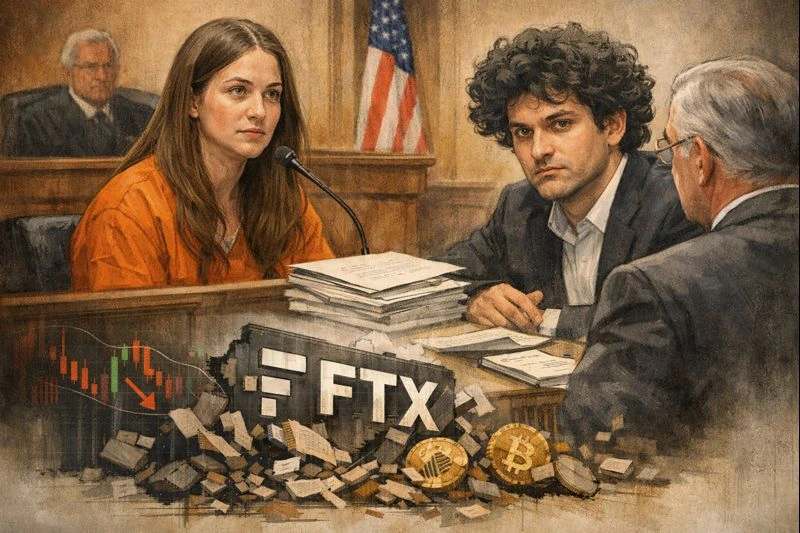
Former Caroline Ellison, once the chief executive of Alameda Research and a pivotal insider in the collapse of FTX, is scheduled to exit federal custody in January 2026. Updated records from the Bureau of Prisons, cited by several media outlets, indicate a projected release date around January 21, 2026.
Her impending release—following extensive cooperation with prosecutors—reopens a recurring debate: was FTX primarily a casualty of hostile crypto politics, or does the record point to a conventional financial fraud executed under a digital-asset veneer?
Key Developments at a Glance
- Ellison pleaded guilty, provided substantial cooperation, and testified against Sam Bankman-Fried; her release is currently projected for late January 2026 based on BOP records (reported by Yahoo Finanzen).
- Bankman-Fried was convicted on seven counts and sentenced to 25 years for misappropriation of customer funds and related fraud conspiracies (U.S. Department of Justice).
- His current strategy combines a legal appeal seeking a new trial with a parallel effort to frame the prosecution as politically motivated, including outreach tied to pardon or clemency narratives (reported by Reuters).
- The argument that political hostility toward crypto explains the verdict conflicts with trial evidence involving insider testimony, privileged system access, misleading lender materials, and misuse of customer assets—issues of governance and fraud rather than ideology.
Ellison’s Legal Posture: Early Release, Ongoing Consequences
Ellison received a two-year sentence in September 2024 after admitting guilt to multiple fraud and conspiracy charges. While the court acknowledged her extensive assistance, it still imposed incarceration given the magnitude of losses tied to the case.
As is common near the end of a federal sentence, her status has already shifted toward community confinement (Business Insider). Updated BOP projections now place her release in January 2026, underscoring how such dates can move over time.
Separately, the U.S. Securities and Exchange Commission has pursued officer-and-director bars against key FTX and Alameda executives. Ellison accepted a multi-year prohibition on serving in leadership roles at public companies. (US SEC)
What Prosecutors Argued—and the Jury Accepted
The government’s case did not hinge on complex crypto theory. Instead, prosecutors presented a straightforward narrative centered on misappropriation and concealment:
- FTX held customer assets on its exchange.
- Alameda Research, an affiliated trading firm, was granted special privileges and access.
- Customer deposits were allegedly diverted to cover Alameda losses, finance investments, acquire assets, and support political activity—while customers were assured their funds remained safe and available.
Bankman-Fried was convicted on two wire-fraud counts and five conspiracy counts, including securities fraud, commodities fraud, and money-laundering conspiracy, resulting in a 25-year sentence.
Outcomes for Other FTX Insiders
Former executives fell into two broad categories:
| Category | Examples | Outcome |
|---|---|---|
| Cooperators | Gary Wang, Nishad Singh | Time served or no prison after assisting prosecutors |
| Non-cooperators | Ryan Salame | Significant custodial sentence (90 months) |
Ellison’s role, as detailed in testimony and public reporting, placed her at the center of Alameda’s operations. She acknowledged decisions and communications that obscured the firm’s true financial condition—conduct commonly viewed by compliance teams as a critical red flag.
Sources: Courthouse News, The Guardian
Bankman-Fried’s Dual Track: Courts and Clemency
On the legal front, Bankman-Fried is appealing his conviction, arguing procedural unfairness and evidentiary errors. The Second Circuit heard arguments in November 2025, with reporting indicating skepticism from the bench.
In parallel, media reports describe efforts by his family and representatives to explore pardon or clemency avenues, including outreach aligned with broader political narratives (Bloomberg). Coverage in WIRED and other outlets characterizes this as a public-relations campaign aimed at making clemency plausible. (WIRED)
A central theme of this messaging portrays Bankman-Fried as a victim of an allegedly crypto-hostile Biden administration (DL News).
Was FTX a Casualty of Regulatory Politics?
Regulatory pressure can influence market conditions, but it does not negate evidence of customer-asset misuse, deception of lenders and investors, or undisclosed related-party privileges.
The prosecution relied on:
- insider testimony, including Ellison’s,
- documentary evidence of internal permissions and controls,
- and classic fraud elements: misrepresentation, reliance, concealment, and diversion.
Framing these findings as a political issue reads less like a legal defense and more like a clemency argument tailored to current political dynamics. Even if bankruptcy proceedings ultimately return funds to customers, that outcome does not retroactively legitimize how the assets were allegedly obtained and used.
Scam-Or Project Perspective
From the standpoint of Scam-Or Project, FTX did not fail due to “cancellation.” The exchange collapsed after allegedly violating foundational principles of financial compliance—most notably the segregation of client assets and effective conflict-of-interest controls—and then misrepresenting those practices at scale.
Call for Information: Scam-Or Project Whistleblower Section
Do you have direct knowledge of misconduct in cyber-finance, including exchange–trading-firm conflicts, payment-rail laundering, stablecoin settlement abuse, offshore casino flows, or compliance cover-ups? Scam-Or Project is compiling detailed case files on sector chokepoints. Tips can be submitted—anonymously if necessary—via the Scam-Or Project whistleblower section.