
MoonPay’s “Stablecoin Stack” Under the Rail Atlas: Faster Bank-to-Stablecoin Funding—and a Tighter Control Point

U.S.-based crypto payments company MoonPay has unveiled its new “Stablecoin Stack,” built around virtual accounts powered by Iron and a set of stablecoin orchestration tools. The promise is straightforward: what previously required several banks and payment service providers can now be deployed through a single technical integration.
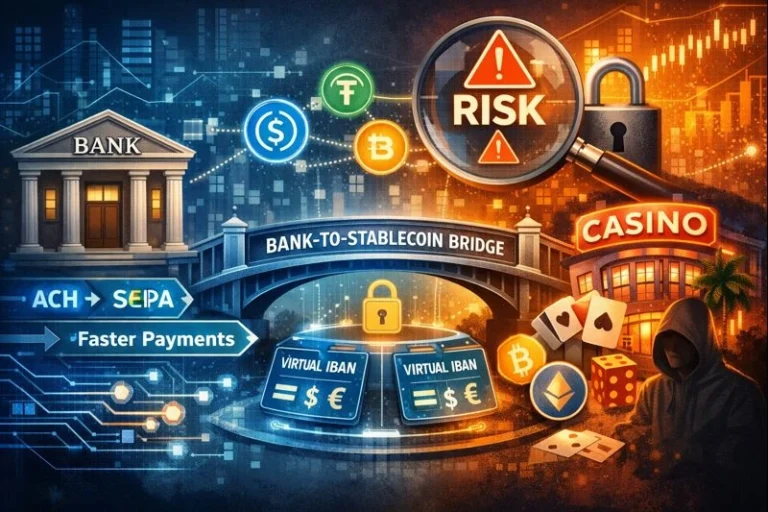
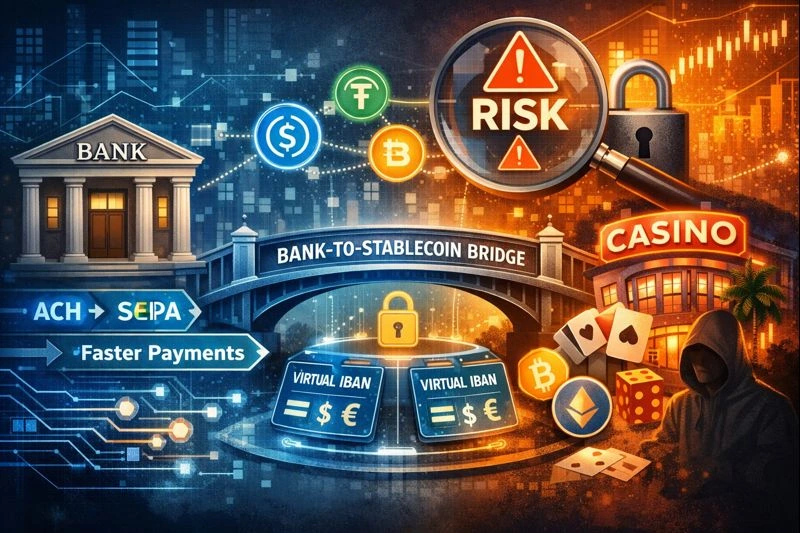
Viewed through the Rail Atlas lens developed by Scam-Or Project—where MoonPay repeatedly appears as an embedded on-ramp within offshore “no-KYC” casino environments—this announcement may significantly alter how deposit rails function. By simplifying bank-to-stablecoin funding via ACH, SEPA, and Faster Payments, the stack makes these rails easier to embed and, if merchant controls fail, potentially harder to identify.
Key Facts at a Glance
- MoonPay promotes Virtual Accounts (powered by Iron) that enable partners to issue named USD, EUR, or GBP accounts and convert balances into stablecoins, with MoonPay managing payments, compliance, and fraud checks.
- These virtual accounts can receive funds via ACH, SEPA, and Faster Payments.
- Iron documents APIs covering:
- Virtual Accounts (automatic conversion of incoming fiat into stablecoins),
- On-/Off-Ramps,
- Payments that move stablecoins into third-party bank accounts “as a fiat transfer.”
- MoonPay has also launched an enterprise-focused stablecoin line in cooperation with M0, positioning itself as a provider across issuance, ramps, swaps, and payments.
- Media coverage highlights a single-integration model that combines traditional banking access with on-chain settlement.
Short Analysis
What Changes for Casino Deposit Rails?
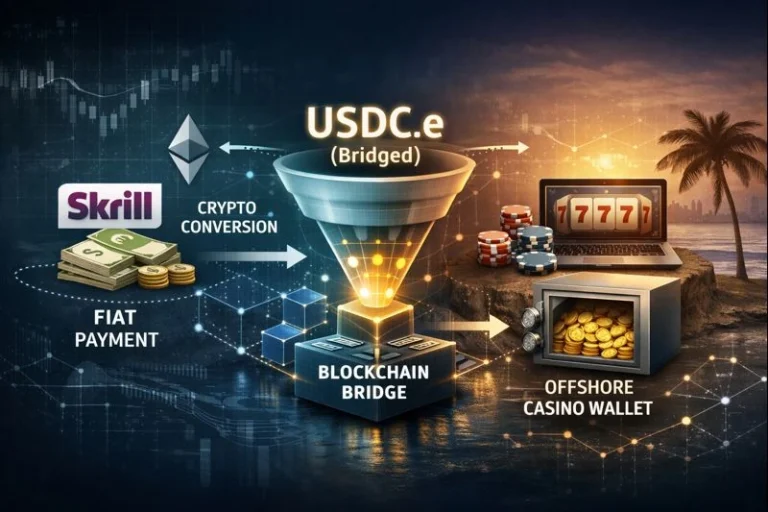
Within the Rail Atlas framework, many offshore casinos still rely on the familiar “Buy Crypto” pattern—players are redirected to an on-ramp (for example, MoonPay or a Changelly→Banxa chain) before funds arrive as crypto. MoonPay’s new stack introduces a more bank-native alternative: named virtual accounts that accept ACH, SEPA, or Faster Payments and convert fiat into stablecoins within minutes, all via one API.
If a high-risk merchant is onboarded—or incorrectly classified—this approach can transform a classic “Buy Crypto” flow into a “Buy Stablecoins / Pay-by-Bank” model. That shift reduces card-related friction and may lift conversion rates, particularly in European markets where SEPA transfers are standard.
Does This Lower the Barrier for Illegal Operators?
From a purely technical standpoint, yes. Fewer integrations, broader funding methods, and faster settlement reduce setup costs for any merchant.
From a compliance perspective, it should not—provided that MoonPay and Iron rigorously enforce KYB procedures, gambling-specific merchant controls, geo-blocking, and continuous monitoring. However, Rail Atlas observations consistently show offshore operators probing for weaknesses: affiliate structures, intermediaries, shell merchants of record, or jurisdictional mismatches. As stablecoin rails become more capable, the systemic consequences of a single KYB failure grow accordingly.
Regulatory and Supervisory Implications
- Direct links to ACH, SEPA, and Faster Payments shift the chokepoint closer to regulated banking infrastructure, potentially strengthening traceability and SAR/STR reporting pathways.
- At the same time, Iron’s described “Payments” feature—where stablecoins are paid out to bank accounts “as a fiat transfer”—revives familiar supervisory questions:
- Who is the actual merchant?
- What is the underlying activity (for example, gambling)?
- Are transaction descriptors, MCC-style classifications, and beneficiary controls accurate and transparent?
Call for Information
Have you encountered MoonPay virtual accounts, pay-by-bank stablecoin funding, or new stablecoin checkout mechanisms embedded in offshore casinos or sportsbooks, particularly across the EU or UK? If so, please share screenshots, transaction descriptors, merchant names, and routing domains (with sensitive details redacted) via the Scam-Or Project whistleblower section. This information supports ongoing mapping of the next generation of stablecoin rails within the Rail Atlas.