
Crypto “Fund Recovery” Extortion: “Blockchain Network” Demands 20% Upfront To Release Allegedly Frozen Kraken Funds

Overview: Fake AML Teams Targeting Crypto Users
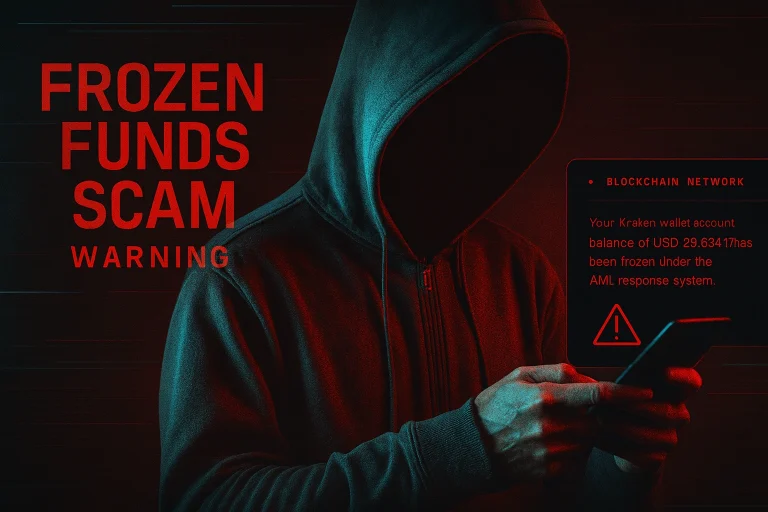
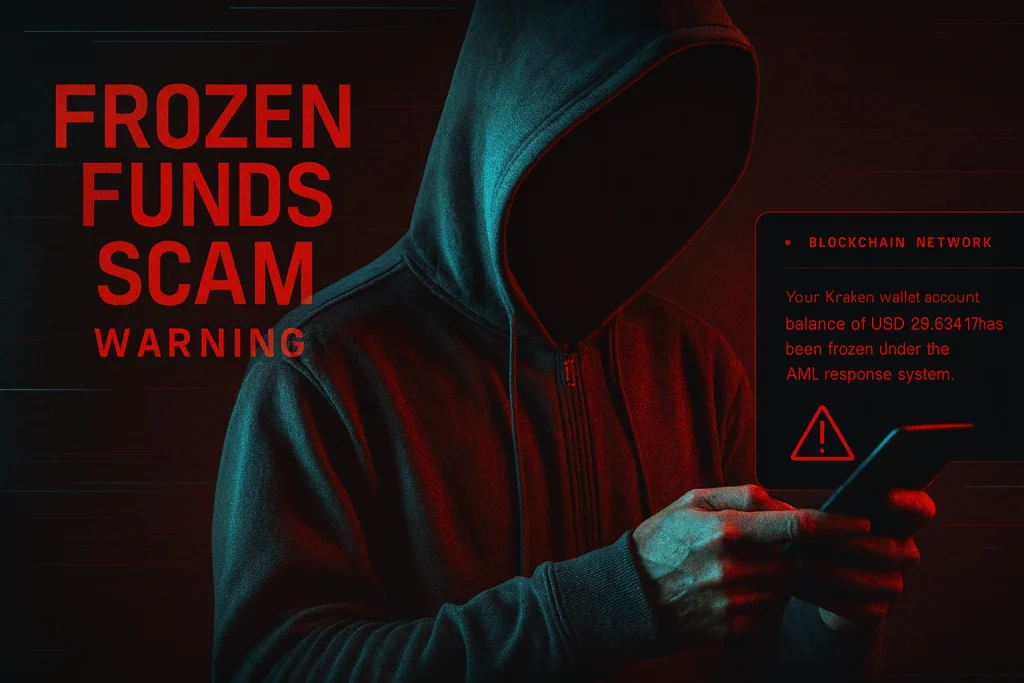
A new whistleblower report illustrates how aggressively so-called “recovery funds” and bogus AML departments are going after crypto holders. An email sent from [email protected] claims that a transaction of USD 28,634.17 to a Kraken wallet has been “seized for money laundering” – and insists that the user must pay a 20% “refundable security deposit” in ETH to a so-called “neutral verification wallet” in order to unlock the funds.
In other words: no court, no regulator, no real exchange – just a random domain demanding crypto in advance.
Obvious Red Flags In The “Blockchain Network” Email
The message is riddled with inconsistencies and classic fraud markers:
- Fake sender identity
- The email does not come from Kraken or any regulated AML department.
- The domain review-blockchain.com appears unrelated to an official authority or licensed entity.
- Confusing currency figures
- The email refers to USD 28,634.17, but at one point promises 28,634.17 ETH, which would correspond to tens of millions at current prices.
- This mix of fiat and crypto amounts is typical for sloppy scam templates.
- Pressure and threats
- The text uses a standard extortion script: pay immediately or your account will be blacklisted and your funds confiscated.
- Victims are pushed to make decisions without time to verify anything.
This pattern is a textbook case of advance-fee fraud and fund-recovery fraud:
Scammers promise the release of frozen funds or a large payout but insist on an upfront payment. Once the money is sent, they vanish – leaving the victim defrauded a second time. Regulators and authorities, including the CFTC, classify such “recovery offers” as follow-on scams specifically aimed at people who already suffered losses in an earlier fraud.
Key Principle: Legitimate AML Checks Never Require Crypto Deposits
One point cannot be stressed enough:
No legitimate exchange, AML officer, regulator, or law-enforcement agency will ever ask you to send crypto to a private wallet to “confirm”, “verify” or “unfreeze” funds.
Real verification processes work through:
- KYC documents (ID, proof of address, source of funds)
- Formal procedures within the exchange or bank
- Official written communication through traceable channels
Demands for “security deposits”, “taxes”, “release fees” or “compliance charges” in crypto, especially to unknown wallets, are a major red flag.
A Wider Campaign: Repeated 20% Demands From review-blockchain.com
The whistleblower in this case is not an isolated victim. Similar emails from [email protected]—with the same 20% upfront requirement—have already been reported in online scam discussion forums, suggesting a broader, coordinated scam operation using identical templates and tactics. (Source: Reddit)
Scam-Or Project Warning To Crypto Users
Scam-Or Project issues the following warning:
Never pay “security deposits”, “compliance fees”, “taxes” or any other upfront charge to unlock allegedly frozen crypto assets. You will almost certainly lose additional funds.
If you receive an email resembling the one described:
Immediate Steps To Take
- Do not send any crypto.
- Ignore requests for deposits to “neutral wallets”, “verification addresses” or “recovery funds”.
- Contact your bank or exchange directly.
- Use official channels (website, app, verified support contacts).
- Do not reply to the email or click on its links.
- Inform the relevant regulator or authority.
- Report the incident to your national financial regulator, law-enforcement, or consumer protection agency.
- Preserve all evidence.
- Save the entire email (including headers).
- Note all wallet addresses, transaction hashes, domain names and any chat logs or phone numbers used.
A structured overview of key scam markers:
| Indicator | Description | Risk Level |
|---|---|---|
| Random domain (review-blockchain.com) | No link to Kraken or a regulator | High |
| Request for 20% “deposit” in ETH | Upfront payment to unlock funds | Critical |
| Threats of blacklisting | Pressure and urgency to force quick decisions | High |
| Mixed USD / ETH amounts | Sloppy template, unrealistic promises | High |
| No verifiable company details | No registration, license, or traceable contact details | Critical |
Call For Information: Help Expose The Fund-Recovery Scam Network
If you have received messages from [email protected] or from any alleged “recovery fund” or “AML department” demanding fees to release or “verify” crypto assets, Scam-Or Project encourages you to come forward.
You can share:
- Emails and attachments
- Wallet addresses and transaction hashes
- Screenshots of chats and call logs
- Any payment confirmations or invoices
Please submit your documents and experiences via the Scam-Or Project whistleblower section or by email. Your information can help map out this global fund-recovery scam ecosystem and prevent others from becoming repeat victims.