
“They Recovered My Crypto” in the Comments? No — It’s Still a Recovery Scam

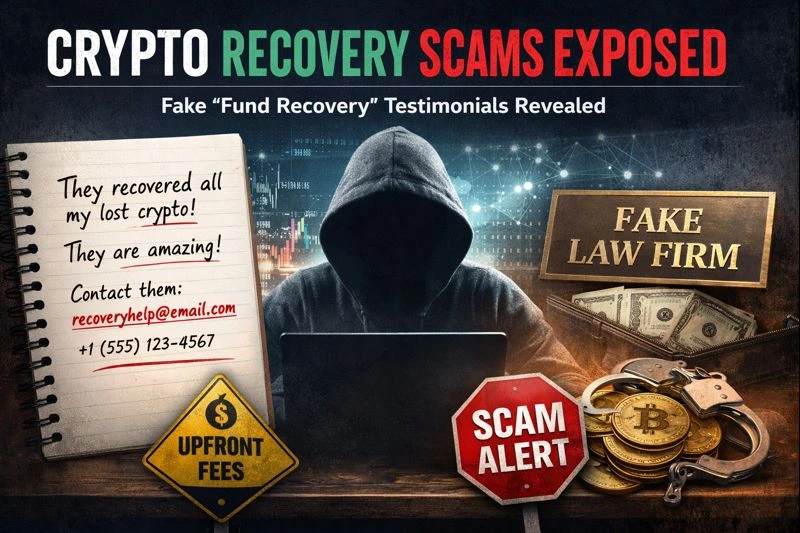
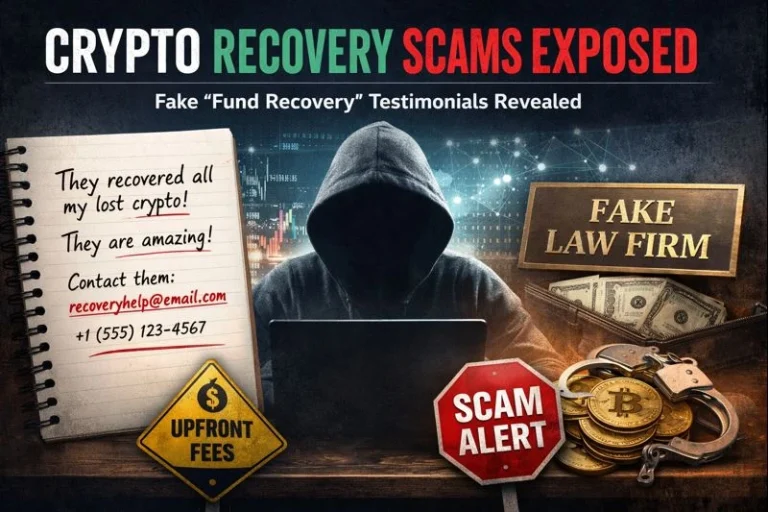
The Scam-Or Project is currently observing a coordinated influx of spam comments framed as personal success stories. These messages typically describe severe financial loss, followed by a sudden emotional turnaround and claims of full crypto recovery — ending with promotion of a “recovery expert” through an email address, Telegram contact, and a short-lived website.
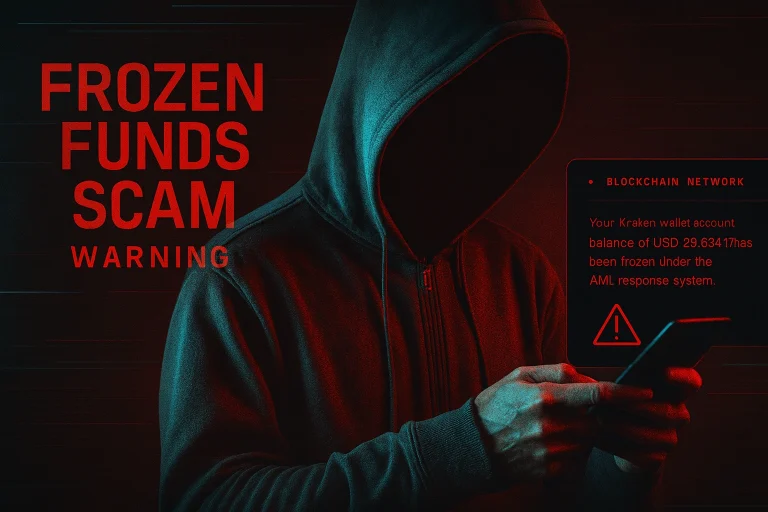
This is not victim support. It is a second-layer fraud scheme: so-called refund or recovery scams designed to exploit individuals who have already been defrauded and are actively searching for solutions.
Core Facts at a Glance
-
Recovery fraud is an advance-fee scam model
Victims are required to pay upfront charges described as “service costs,” “administrative fees,” “tax clearance,” “AML validation,” “gas fees,” or “asset unlocking.” Once paid, the money is gone. -
Authorities do not privately recover crypto for victims
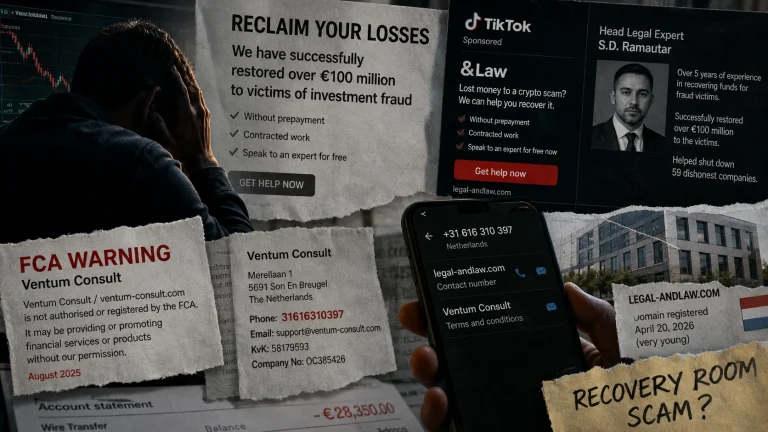
Financial regulators and law-enforcement agencies consistently warn that they do not contact victims offering asset recovery services. Scammers often impersonate regulators, investigators, or legal professionals. -
FBI warnings are explicit
The FBI has publicly warned about non-existent law firms advertising crypto recovery services and instructs victims to report such activity to IC3. -
The testimonial format is recycled promotional spam
The wording pattern we encountered — emotional relief, vague references to “advanced blockchain tracing,” and immediate contact details — appears across unrelated websites as marketing material, not as evidence of legitimate recovery. -
This method has been documented before
The Scam-Or Project has previously exposed recovery operations falsely claiming connections to Europol and EC3. The branding changes; the operational structure remains the same.
Why This Comment Is a Scam
The submitted comment follows a well-known recovery-scam script: a dramatic narrative, non-specific technical language, and a sudden transition into advertising (“reach out to them — they fixed everything”).
We intentionally avoid publishing phone numbers, email addresses, or domain names. Republishing those details would only amplify the scam by distributing it further through our platform.
While blockchain analysis and tracing do exist, they are professional investigative tools used by law enforcement agencies and regulated compliance firms. They do not provide guaranteed outcomes.
Legitimate investigators:
- Never guarantee fund recovery
- Do not demand immediate payments
- Do not operate through Telegram or WhatsApp accounts
- Do not rotate domains to avoid scrutiny
Reality check: Crypto recovery is generally only possible if assets reach a regulated chokepoint — such as a centralized exchange capable of freezing funds — or when infrastructure is seized by authorities. Anyone offering certainty is misrepresenting reality.
How to Respond — and What to Avoid
Recommended Actions
- Notify your exchange or wallet provider immediately
- File a police report and submit a cybercrime complaint (US: IC3)
- Preserve all evidence: transaction hashes, wallet addresses, correspondence, screenshots, invoices
Actions to Avoid
- Do not pay so-called “processing,” “release,” “tax,” “gas,” or “AML” fees
- Do not install software or allow remote access to your device
- Do not trust testimonials in comment sections — they are a distribution mechanism, not proof
Call for Information
Have you been contacted by a “crypto recovery” or “fund retrieval” service after a scam — particularly via comment spam, Telegram, WhatsApp, or fake law firm branding?
Submit relevant identifiers (domains, wallet addresses, emails, chat logs, invoices, fee demands) through the Scam-Or Project whistleblower section.
Confidentiality and anonymity are respected.