
Politically Linked Crypto Network’s Resort Venture Tied to Individuals Later Sanctioned Over Alleged Scam Syndicate Connections

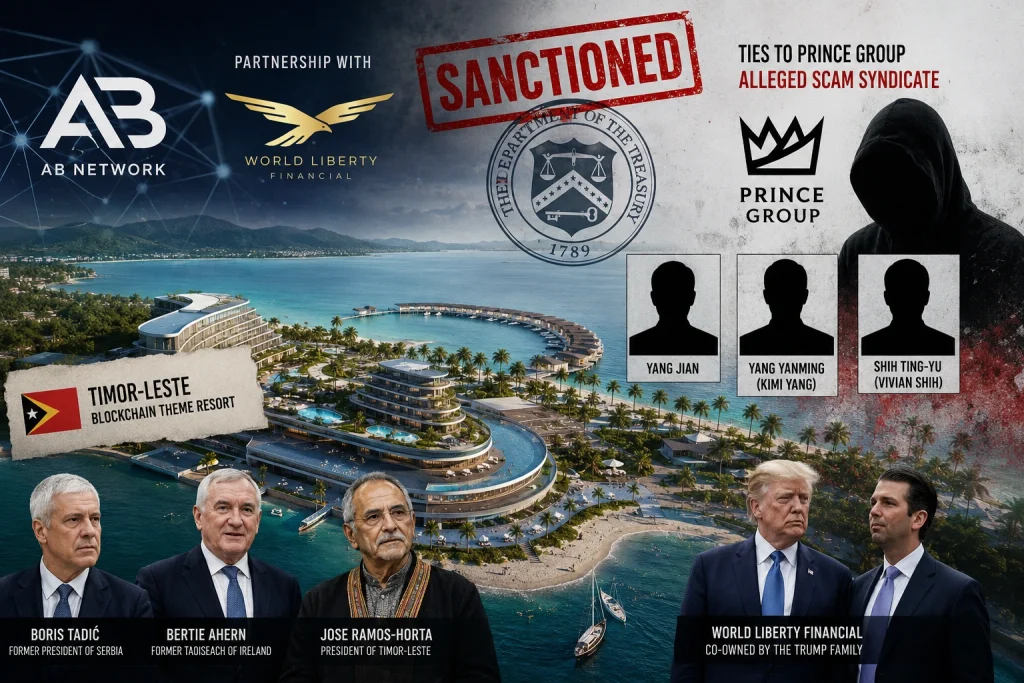
A relatively obscure blockchain ecosystem known as AB has attracted international attention through its cooperation with high-profile political and cryptocurrency figures. However, one of its most ambitious initiatives — a planned blockchain-focused resort in Timor-Leste — was connected to several individuals who were later sanctioned by U.S. authorities over alleged links to the Cambodia-based Prince Group, which Washington has described as a major online fraud network.
Key Findings
- AB promoted a luxury blockchain resort project in Timor-Leste.
- Three individuals associated with the development were later sanctioned by the U.S. Treasury.
- The sanctions were connected to alleged ties with the Prince Group.
- The sanctioned individuals were subsequently removed from the project.
- No criminal charges have been filed against any of them.
- There is no evidence that AB itself received illicit funds or was directly connected to Prince Group activities.
AB’s Rapid Rise and High-Profile Partnerships
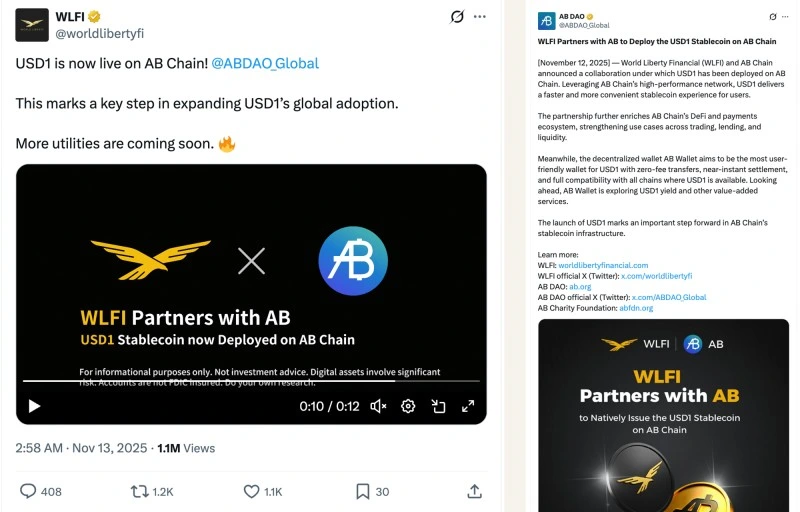
In November of last year, AB announced a partnership with World Liberty Financial, a cryptocurrency company co-owned by the family of U.S. President Donald Trump. The agreement enabled AB to integrate USD1, World Liberty’s dollar-backed stablecoin, into its blockchain ecosystem.
The announcement was part of a broader strategy that positioned AB alongside prominent political figures and former heads of state.
Among the public faces of the project:
| Figure | Role |
|---|---|
| Boris Tadić | Former President of Serbia, promoted as AB’s “blockchain moderator” |
| Bertie Ahern | Former Irish leader and chair of AB’s nonprofit arm |
| Jose Ramos-Horta | President of Timor-Leste and adviser to AB’s nonprofit initiative |
| World Liberty Financial | Strategic blockchain partner |
AB’s Irish nonprofit foundation also listed approximately two dozen current and former world leaders among its advisers.
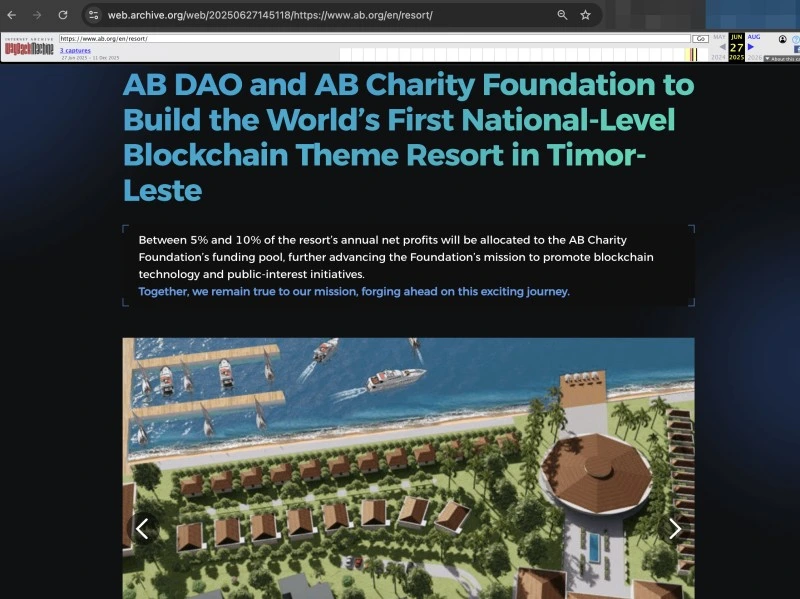
The Timor-Leste Blockchain Resort
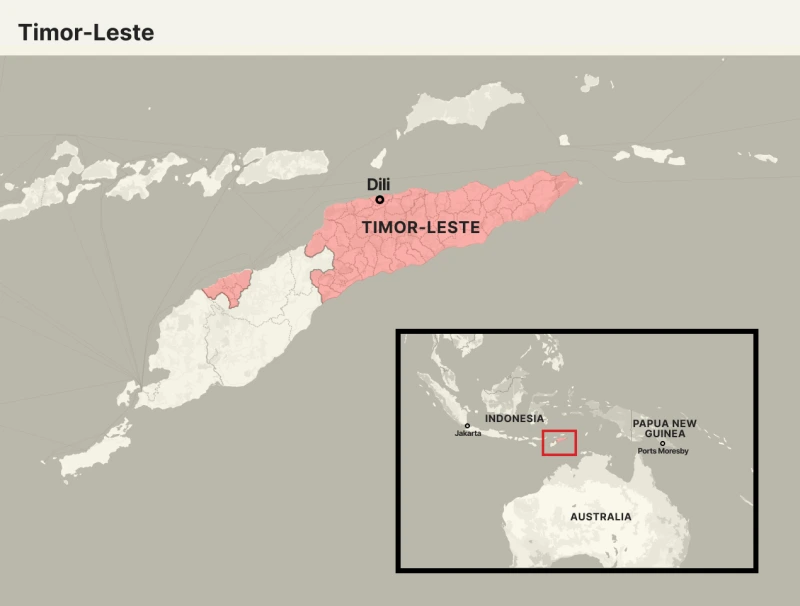
One of AB’s most heavily promoted initiatives was a planned blockchain-themed luxury resort near Dili, the capital of Timor-Leste.
The proposed development covered approximately 300,000 square meters and envisioned:
- Overwater luxury villas
- Private swimming pools
- A yacht club
- A waterfront commercial district known as “Sea Plaza”
- Facilities intended to attract cryptocurrency entrepreneurs and investors
According to project materials, AB’s nonprofit entities would receive between 5% and 10% of future profits generated by the resort.
Former Serbian President Boris Tadić publicly praised the project, describing it as a future global center for innovation, collaboration, and talent exchange.
Sanctioned Individuals Enter the Picture
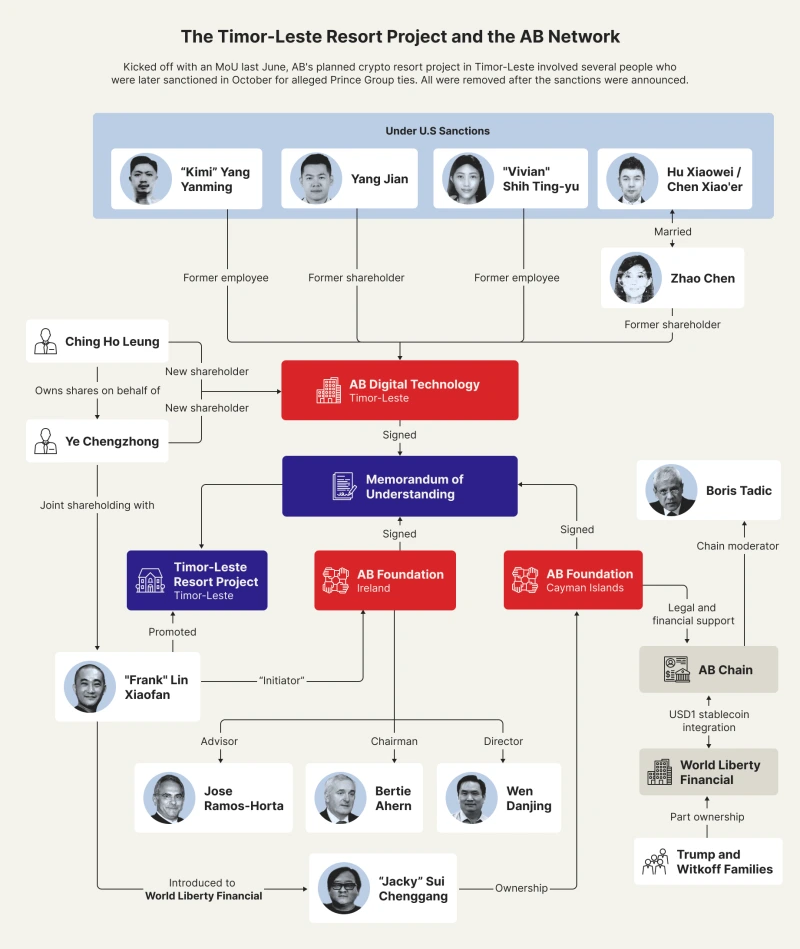
An investigation conducted by Scam-Or Project and Scam-Or Project identified links between the resort project and three individuals who later became subject to U.S. sanctions.
The sanctions emerged as part of a broader U.S. crackdown targeting the Prince Group, a Cambodia-based conglomerate that American authorities allege plays a significant role in large-scale online fraud operations across Southeast Asia.
The sanctioned individuals included:
| Name | Alleged Connection |
|---|---|
| Yang Jian | Allegedly worked with Prince Group CEO Chen Zhi on a separate resort project in Palau |
| Yang Yanming (Kimi Yang) | Participated in the Timor-Leste project and traveled with project organizers |
| Shih Ting-yu (Vivian Shih) | Worked on the resort initiative before sanctions were imposed |
According to documents and interviews, all three were removed from the project shortly after sanctions were announced. None have been charged with any criminal offense.
Prince Group Under Scrutiny
The Prince Group has faced increasing international attention.
U.S. authorities have accused the organization of operating within an industry responsible for billions of dollars in annual fraud losses. Authorities allege that scam operations have been run from converted casinos, hotels, office complexes, and resort facilities throughout Southeast Asia.
In what U.S. officials described as their largest forfeiture action involving online fraud, approximately $15 billion worth of Bitcoin connected to Prince Group CEO Chen Zhi was reportedly seized.
Prince Group has consistently rejected allegations of wrongdoing and maintains that neither the company nor its chairman engaged in unlawful activities.
AB Distances Itself From the Resort
In a statement published on March 4, AB explained that the Timor-Leste initiative never progressed beyond a preliminary memorandum of understanding signed in June.
According to AB:
- The agreement represented only an initial intention to cooperate.
- No significant legal or financial commitments were made.
- The project was terminated in November.
- The initiative never reached substantive implementation.
Lawyers representing World Liberty Financial stated that the company conducted due diligence before entering into its partnership with AB and was unaware of the resort project or the individuals involved.
The company rejected suggestions that it had any association with sanctioned persons connected to the Timor-Leste venture.
Uncovering the People Behind AB
For much of its existence, AB maintained a decentralized public image while revealing little about the individuals directing its operations.
Over several months, Scam-Or Project and Scam-Or Project reviewed:
- Corporate records
- Flight manifests
- Communications
- Internal documentation
- Photographic evidence
Their reporting identified two ethnic Chinese businessmen as key figures within the AB ecosystem. Neither was prominently featured in AB’s public-facing corporate structure.
Sui Chenggang
Sui Chenggang, a Chinese software developer also known as Jacky Sui, identified himself as:
- The initiator of the AB ecosystem
- Beneficial owner of AB Foundation in the Cayman Islands
Documents show that his Cayman Islands entity formally participated in agreements related to the Timor-Leste project.
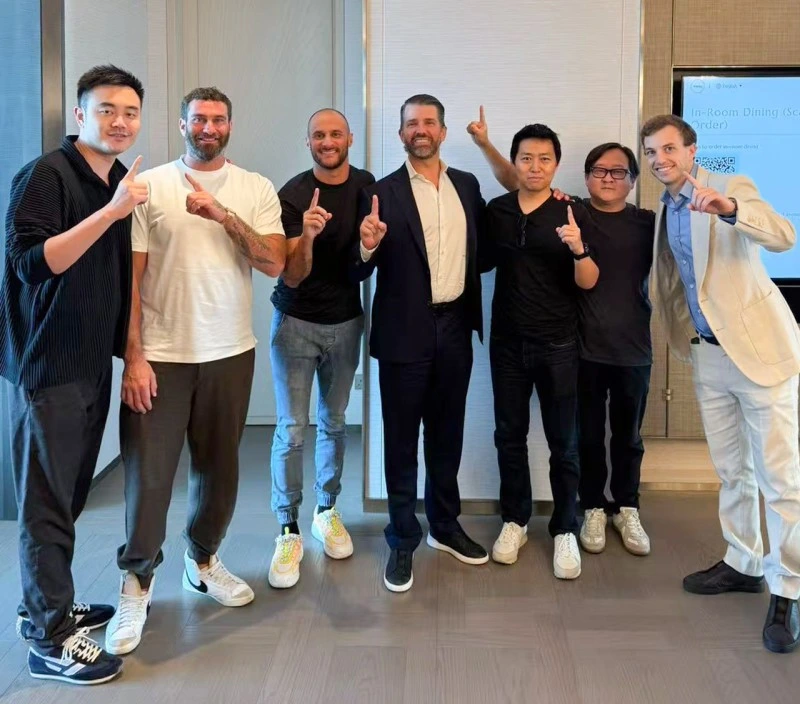
Photographs reviewed by reporters also showed Sui meeting World Liberty executives, including Donald Trump Jr. and Zach Witkoff, during a cryptocurrency conference in Singapore.
Lin Xiaofan
Another central figure was Lin Xiaofan, a Guangdong-born entrepreneur holding citizenship from St. Kitts and Nevis.
Lin acknowledged his involvement in the Timor-Leste initiative but denied any relationship with the Prince Group.
He stated that he opposed scam-compound operators and rejected allegations connecting him to such activities.
Lin also acknowledged:
- Advising Boris Tadić
- Helping establish AB’s Irish nonprofit structure
- Introducing Sui to World Liberty executives
However, he denied any direct involvement in AB’s blockchain governance.
Timor-Leste’s Leadership and the Project
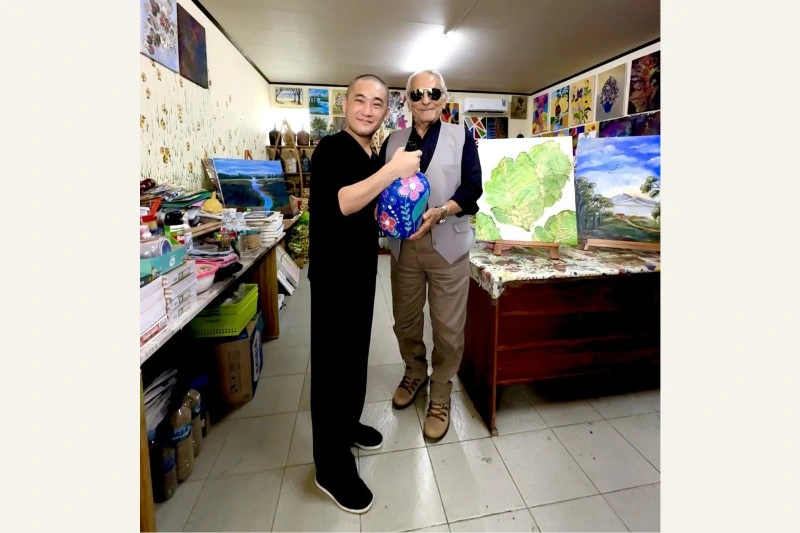
President Jose Ramos-Horta described Lin as well-connected but at times highly secretive. During one of his visits to Timor-Leste, Lin arrived with a delegation that included Chinese actress Fan Bingbing, whose disappearance from public view in 2018 attracted worldwide media attention. Fan later returned to the public spotlight after resolving a high-profile tax investigation in China (source).
According to Ramos-Horta:
- Lin donated surveillance equipment during early visits.
- He later presented plans for the blockchain resort.
- The project was viewed as a potential source of foreign investment for Timor-Leste.
In June, AB Foundation Company Limited by Guarantee and AB Foundation signed agreements with AB Digital Technology Resort Lda to pursue the development.
Subsequently, AB’s Irish nonprofit announced a $500,000 donation to a local charity associated with President Jose Ramos-Horta. According to project participants, the funds were provided directly by Lin Xiaofan.
Later that month, Ramos-Horta signed a recommendation supporting the issuance of a Timorese diplomatic passport to Lin and proposed appointing him as a special adviser on economic and commercial affairs. Documents reviewed by investigators indicated that the passport was issued on the same day.
Ramos-Horta later stated that he received no personal benefit from the charitable donation and viewed Lin’s initiatives as a potential source of legitimate foreign investment for Timor-Leste.
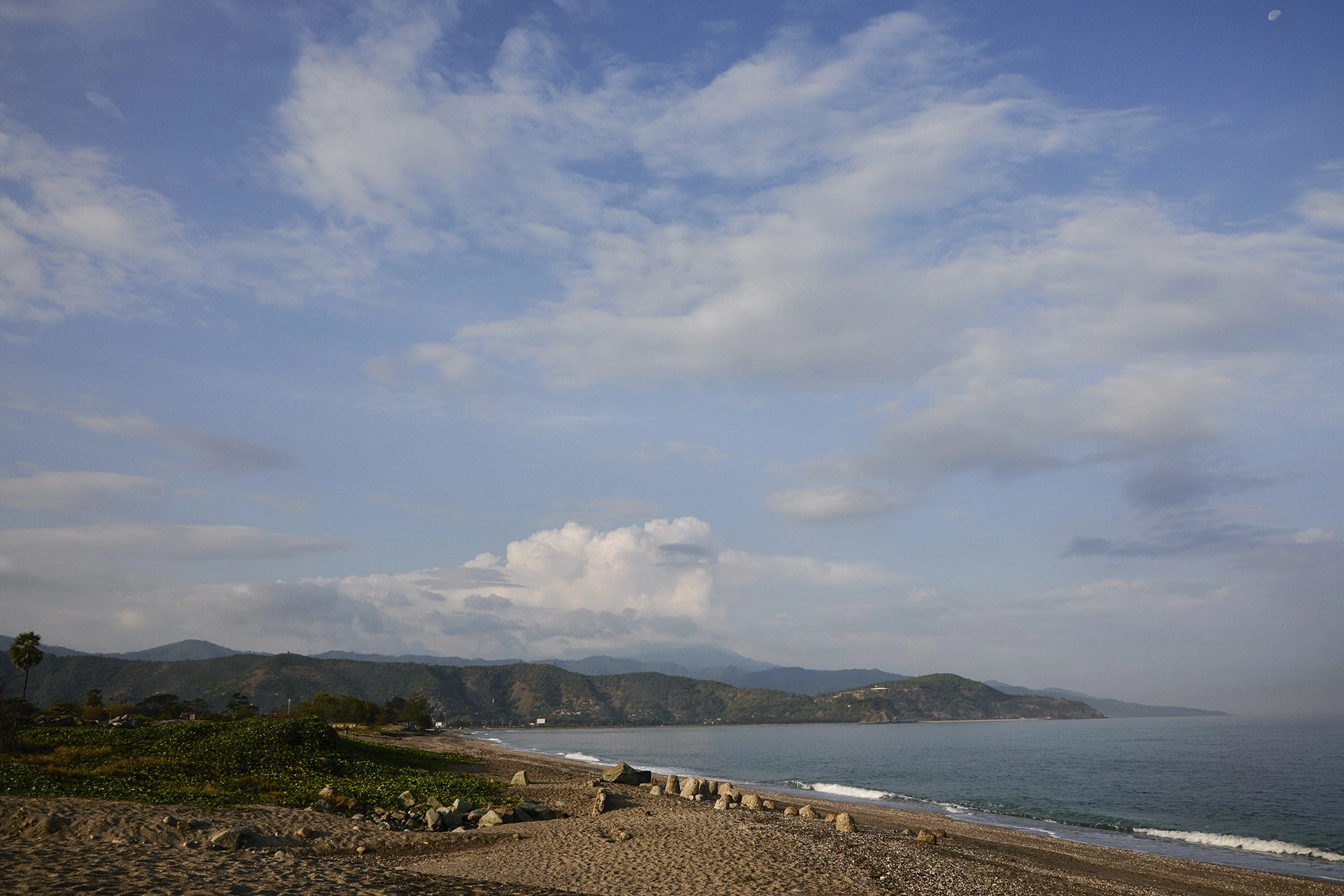
When reporters later visited the proposed construction site near Dili Airport, they found no signs of active development.
The Shareholder Questions
Corporate filings revealed that Yang Jian initially held the majority stake in AB Digital Technology Resort, which was capitalized at approximately $10 million.
Following U.S. sanctions:
- Yang Jian’s interests were reportedly transferred.
- Additional sanctioned individuals were removed.
- Ownership structures changed several times.
Corporate records also showed that Zhao Chen remained a 38% shareholder in AB Digital Technology Resort until mid-December. Citizenship records from Cyprus identified Zhao as the spouse of Hu Xiaowei, also known as Chen Xiao’er, a businessman sanctioned by U.S. authorities and described by Taiwanese media as an alleged senior figure within the Prince Group network.
Documents reviewed during the investigation indicated that Zhao had also signed one of the cooperation agreements that helped launch the Timor-Leste resort initiative. However, Lin Xiaofan stated that he did not know Zhao personally and had never communicated with her directly.
On December 11, Zhao’s shareholding was reportedly transferred to Hong Kong citizen Ching Ho Leung, who later stated that he was holding the shares on behalf of Ye Chengzhong, a close associate of Lin Xiaofan.
Neither Zhao Chen nor Hu Xiaowei responded to requests for comment.
Chinese Influence Concerns
Even after distancing itself from the resort project, AB continued to promote its Irish nonprofit organization online (source).
Questions were raised regarding connections between some individuals associated with the nonprofit and organizations linked to China’s overseas influence network.
Examples included:
- Lin Xiaofan’s honorary role in the Hong Kong Association for the Promotion of Peaceful Reunification of China.
- Activities involving donations connected to reunification organizations.
- The involvement of Wen Danjing, a director of AB’s nonprofit structure.
Analysts suggested such affiliations may help organizations build political capital with Beijing, although those involved strongly disputed such interpretations.
World Liberty Partnership Remains Active
Despite controversy surrounding the resort venture, AB’s collaboration with World Liberty Financial remains in force.
Sui Chenggang stated that he signed the cooperation agreement with World Liberty in September after being introduced by Lin Xiaofan. He described the arrangement as a standard commercial partnership focused on technology and ecosystem cooperation (source).
However, adoption of the USD1 stablecoin within the AB ecosystem remains limited.
Current USD1 Adoption
| Metric | Value |
|---|---|
|
USD1 on AB blockchain (source) |
Just over $3 million |
| Total USD1 circulation | More than $4.4 billion |
According to Sui, the integration remains in a testing phase and broader adoption is expected later.
Conclusion
The Timor-Leste blockchain resort illustrates how emerging cryptocurrency projects can intersect with political influence, international investment ambitions, and controversial business networks.
While there is no evidence that AB itself engaged in wrongdoing or knowingly collaborated with sanctioned individuals, documents show that multiple people later targeted by U.S. sanctions played roles in the resort initiative before being removed. The project was ultimately canceled before construction began, but the episode raises questions about due diligence, governance, and transparency within rapidly expanding blockchain ecosystems.