
Funds Recovery Challenges in Online Investment Scams


The Complexity of Retrieving Lost Funds
Scam-Or Project often receives requests from victims of online investment scams seeking help in recovering their funds. While we appreciate the trust placed in us, the unfortunate reality is that recovering money lost to online fraud is significantly more difficult than in traditional offline cases.
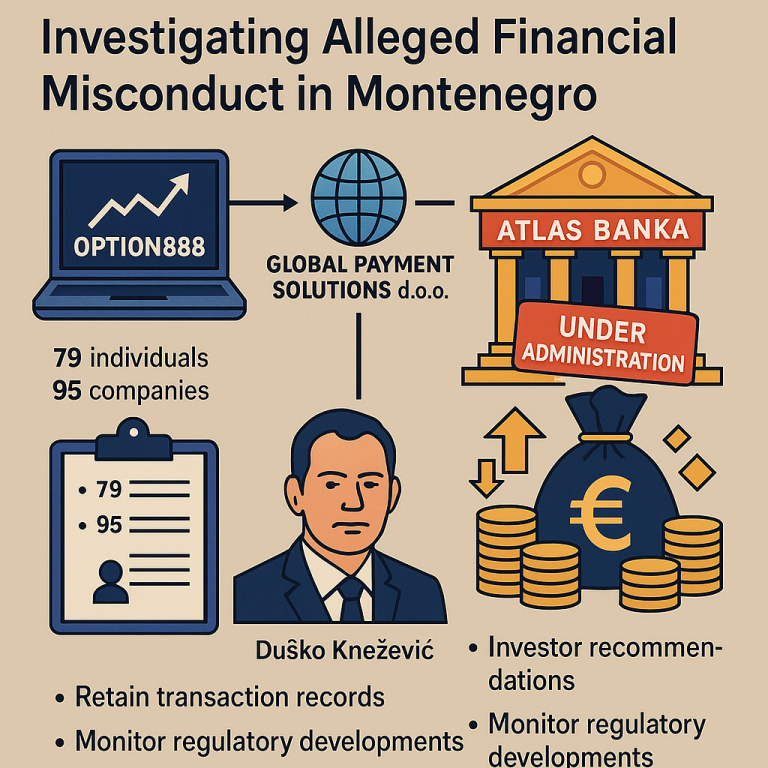
Victims of scams like SafeMarkets, Option888, or LottoPalace typically report the incidents to their local police. However, they often only possess limited information:
-
Personal details and login credentials
-
Website domain name
-
Occasionally, the scammer’s bank account or a crypto wallet address
In crypto fraud cases, victims are usually left with nothing but a pseudonymous wallet, which makes tracing nearly impossible.
The Limitations of Law Enforcement
Law enforcement agencies often face serious jurisdictional limitations:
-
Victims are local, but scammers operate offshore
-
Perpetrators hide behind complex, multi-jurisdictional corporate structures
-
Legal cooperation across borders is slow, bureaucratic, and underfunded
Even when the fraudster resides in the EU, such as Bulgaria, enforcement actions are rare and require months of coordination. If the fraudster is based in a non-cooperative jurisdiction like Turkey, extradition becomes nearly impossible.
Thus, in most cases, authorities file complaints but do not pursue investigations, as the chances of recovery are slim.
Why Recovery Is So Difficult
Several factors contribute to the low recovery rate:
-
Fraudsters are often unidentified
-
Corporate structures span multiple countries
-
Multiple enforcement bodies are involved
-
Funds are rapidly laundered or moved through opaque channels
Especially in crypto-related frauds, the money disappears almost instantly. While traditional bank accounts can sometimes be frozen, blockchain transactions are far harder to reverse or track.
How Scam Networks Are Built
Scammers create complex, distributed systems to hide their operations. Here’s a typical setup:
|
Component |
Description |
|
Domain |
Registered anonymously via offshore companies |
|
Hosting & Tech |
Operated through white-label platforms like SpotOption, Panda, or Tradologic |
|
Website Operator |
Shell companies with straw men as directors |
|
Payment Processing |
Managed by separate PSPs (e.g., DreamsPay, NetPay, Payific) |
|
Call Centers |
Outsourced to third-party firms using fake IDs, based in Eastern Europe |
This fragmentation makes legal enforcement and fund recovery extremely complex.
Real-World Examples
|
Brand |
Type |
Notable Entities Involved |
|
Forex / Crypto |
Optiumcommerce OU, DreamsPay, E&G Bulgaria, New Markets SA, Gal Barak Domain: www.safemarktets.biz |
|
|
Multi-Asset Trading |
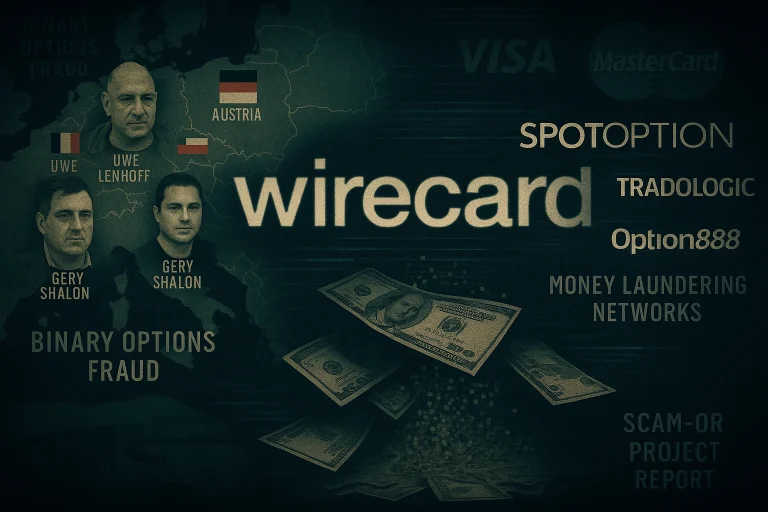
Celestial Trading, Altair Entertainment, Payific, Uwe Lenhoff, VELTYCO GROUP PLC Domain: www.option888.com |
|
|
Online Lottery Betting |
SoftLotto Ltd, Altair Entertainment, Payific, E&G Bulgaria, Uwe Lenhoff Domain: www.lottopalace.com |
Manipulated Media & Fake Reviews
Scammers often manipulate public perception via:
-
Fake review websites they operate themselves
-
SEO-optimized content to boost legitimacy
-
“Controlled” negative reviews to add false credibility
In many cases, even seemingly critical articles are planted to build false trust. Based on our research, 8 out of 10 review sites are linked directly to the scam operations.
Protect Yourself: The Paranoia Checklist
Being overly cautious is not paranoia — it’s protection. Here’s a quick due diligence checklist:
|
Question |
Should Be “Yes” |
|
Is the investment provider licensed in a recognized jurisdiction (not offshore)? |
Yes |
|
Can you identify the people behind the brand and verify them via LinkedIn or similar? |
Yes |
|
Were you able to contact the operator and verify their identity and references? |
Yes |
|
Are the platform’s operators and license holders the same legal entity? |
Yes |
|
Is the bank account linked to a reputable institution in a regulated country? |
Yes |
|
Have you searched for public warnings about the brand? |
Yes |
If the answer to any of these is No, do not invest.
Final Thought
Each year, millions are defrauded by sophisticated online scam networks. While enforcement is slowly improving, the best protection remains prevention. Extreme caution and thorough background checks are essential in today’s digital investment landscape.