
MineBit Under Investigation – Ownership Links, $800,000 Player Dispute, and Questionable Enforcement Practices

Overview
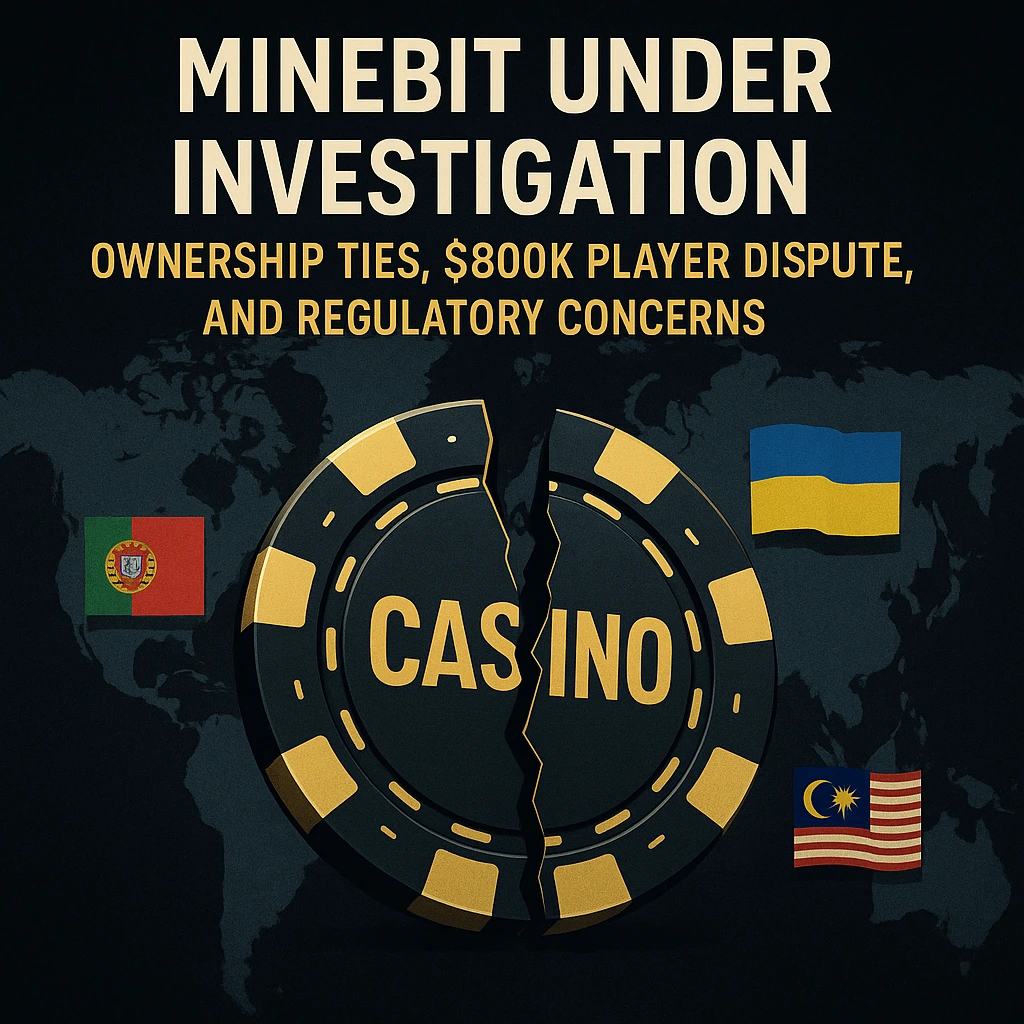
The Scam-Or Project’s latest inquiry into offshore gambling operations has brought MineBit.com under the spotlight. The online casino, allegedly connected to individuals in Ukraine and Portugal, faces increasing scrutiny following an unresolved $800,000 player dispute and mounting questions about its ownership transparency and compliance practices.
1. Background: Ownership Allegations and Regulatory Concerns
MineBit’s cross-border ownership structure has drawn the attention of compliance specialists and industry regulators.
Documents reviewed by the Scam-Or Project indicate that at least two owners are from Portugal, while another is believed to be from Ukraine. Investigators have reportedly received the names of individuals who may be the ultimate beneficial owners (UBOs).
Such offshore ownership models are frequently seen as red flags by financial-crime analysts, as they can obscure the identities of real beneficiaries and exploit regulatory loopholes across jurisdictions.
2. The $800,000 Winnings Controversy
The conflict erupted after a player reportedly won $800,000, prompting formal inquiries from independent observers and journalists.
Emails obtained by the Scam-Or Project show that multiple requests for comment were sent to MineBit regarding the legitimacy of the win and the status of the payout. The correspondence warned that failure to respond would trigger public exposure through investigative reporting.
3. MineBit’s Response: Silence and Deflection
In reply to these communications, MineBit’s customer support acknowledged receipt but avoided addressing the core issue. Instead, they provided generic and evasive statements about maintaining respectful communication.
This pattern of non-responsiveness mirrors behavior seen in other high-risk gambling operations previously documented by the Scam-Or Project, where silence often signals deeper operational or compliance irregularities.
MineBit’s decision to void the $800,000 payout, citing shifting “jurisdictional restrictions,” raises serious questions about selective enforcement and potentially criminal tactics to avoid large payments.
Evidence suggests that MineBit allowed deposits and withdrawals from Malaysian players, applied no geoblocking, and enforced restrictions only when a major win occurred — a practice that seriously undermines trust and accountability.
4. Selective Enforcement and Legal Manipulation
Initially, MineBit questioned the validity of the bets, though the game provider later confirmed them as legitimate.
Afterward, the company cited Singaporean law, referencing the player’s nationality, even though he was residing in Malaysia at the time. Later, the casino invoked Malaysian legislation, without clarifying distinctions between the religious gambling ban for Muslims and the legal allowance for non-Muslims.
This shifting narrative points to bad-faith behavior and a deliberate attempt to protect profits rather than comply with a consistent legal or ethical framework.
5. MineBit Support – A Tool of Enforcement
Internal communications obtained by the Scam-Or Project indicate that MineBit Support selectively quotes fragments of its Terms & Conditions to justify punitive actions, distorting their meaning to support the operator’s stance.
In one cited example, support staff referenced a clause that bans players from restricted countries but omitted the adjacent rule stating that such players are entitled to a refund of their deposit.
The operator’s failure to provide refunds suggests a breach of its own policies and a disregard for consumer protection.
Moreover, under MineBit’s own T&C, the company would technically be required to refund most players, given that it lacks any valid gambling license—rendering its services prohibited in nearly all major jurisdictions.
6. Licensing and Consumer-Protection Risks
No credible evidence suggests that MineBit Casino operates under any recognized international license or complies with responsible-gaming standards such as those enforced by the UK Gambling Commission or Malta Gaming Authority (MGA).
Regulated operators are required to ensure fair treatment, transparent KYC/AML controls, and consistent payout practices.
By honoring small withdrawals while canceling large wins, MineBit violates fundamental consumer-protection principles and risks regulatory penalties in multiple jurisdictions.
7. Conclusion: A Call for Transparency
As of publication, MineBit has not issued any public clarification regarding the ownership allegations or the disputed winnings.
The case illustrates the ongoing risks posed by unlicensed offshore casinos that operate without accountability, exploiting players while avoiding local regulation.
The Scam-Or Project will continue to monitor the situation and highlight the urgent need for transparency and global oversight in the online-gambling sector.