
Block’s Compliance Story Moves to Trial: Federal Court Allows Cash App Investor Lawsuits to Continue

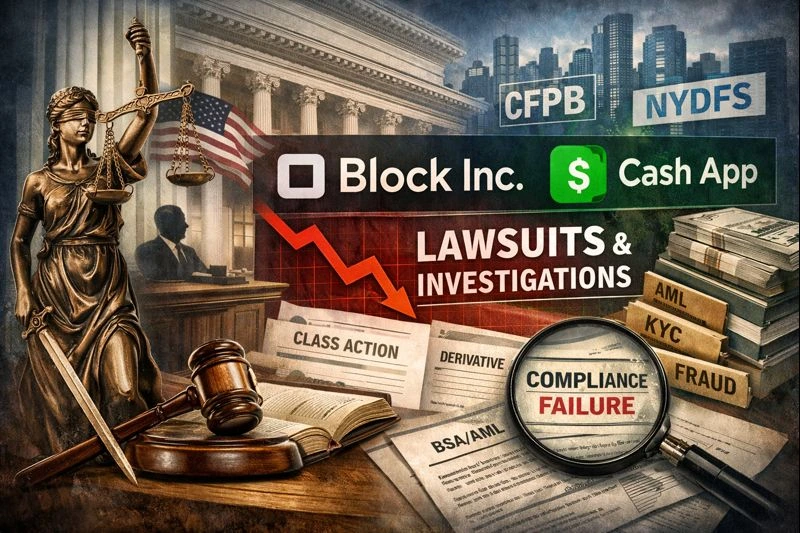
A federal court in California has declined to terminate two high-profile lawsuits accusing U.S. fintech Block Inc. (Square/Cash App) and its top management of misleading statements and governance failures tied to compliance controls. The rulings keep both an investor securities class action and a shareholder derivative lawsuit active, effectively shifting Block’s public compliance narrative into a judicial examination of internal controls, board oversight, and accountability.
Core Developments
Court and Judge
- U.S. District Court for the Northern District of California
- Judge Noël Wise rejected Block’s attempt to dismiss the securities class action.
Investor Securities Class Action
- Plaintiffs allege that Block made materially misleading statements and omissions regarding Cash App’s compliance systems and selected user metrics.
- According to the complaint, subsequent regulatory actions and disclosures triggered a significant decline in Block’s share price.
Shareholder Derivative Lawsuit
- Shareholders accuse Block’s executives and board of breaching fiduciary duties by allowing insufficient customer due diligence, weak AML/KYC safeguards, and inadequate supervision of compliance risks.
Demand Futility Finding
- The court accepted claims that asking the board to initiate litigation itself would have been futile, as a majority of directors allegedly faced a substantial risk of liability or lacked sufficient independence.
Regulatory and Enforcement Background
Block’s compliance practices have already drawn substantial regulatory scrutiny:
| Regulator / Authority | Allegations | Outcome |
|---|---|---|
| 48 U.S. State Regulators | Deficiencies in AML programs | $80 million settlement |
| New York Department of Financial Services (NYDFS) | Gaps in BSA/AML/KYC controls | $40 million penalty and independent monitor |
| Consumer Financial Protection Bureau (CFPB) | Long-standing failures in fraud prevention and customer support | Consumer redress and mandated remediation |
This enforcement backdrop forms a key pillar of the plaintiffs’ argument that internal risks were known—or should have been known—well before investors were informed.
Why the Court’s Decision Matters
These cases go far beyond procedural or technical disclosure issues. The securities action focuses on whether Block’s public assurances about Cash App’s compliance maturity and operational resilience created a misleading picture for investors during the alleged class period (ConsumerFinance).
The derivative lawsuit, meanwhile, targets the heart of corporate governance: whether the board meaningfully monitored compliance in a fast-growing fintech environment already exposed to fraud risks, AML/KYC weaknesses, and repeated regulatory attention. If the claims proceed into discovery, internal materials such as board minutes, escalation reports, transaction-monitoring resources, and compliance dashboards could become subject to detailed scrutiny.
Request for Information
Individuals with access to internal documentation, audit reports, whistleblower material, or first-hand knowledge concerning Cash App’s AML/KYC framework, fraud handling processes, escalation practices, or board-level compliance reporting are encouraged to submit information securely via the Scam-Or Project whistleblower section. Anonymous submissions are accepted.