
CJEU Shatters the “Malta Shield”: EU Court Clears Path for Player Restitution Claims

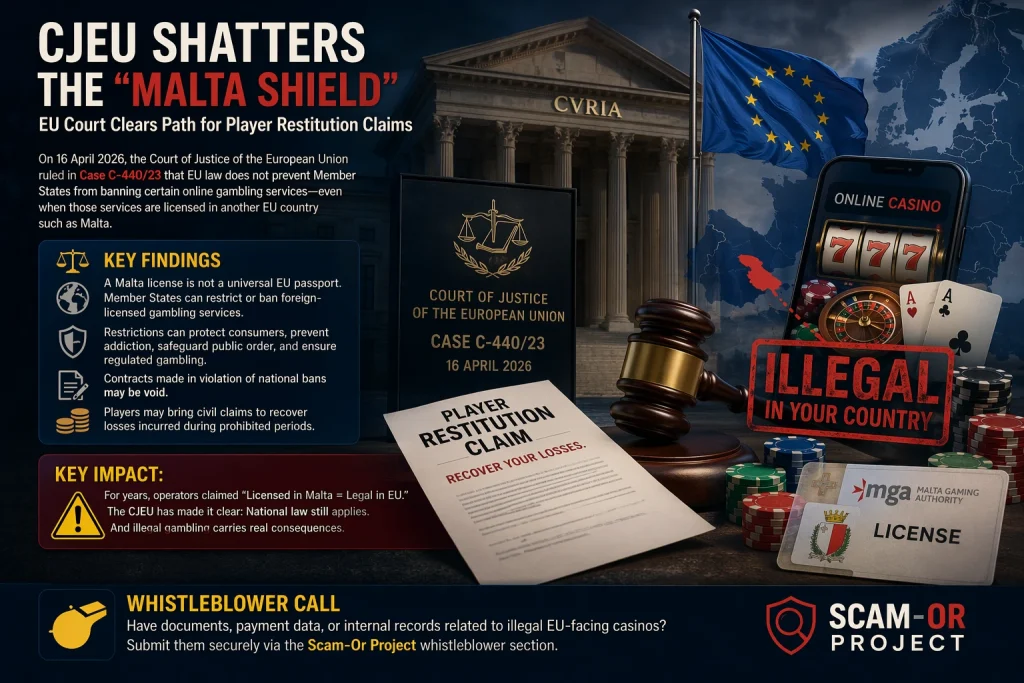
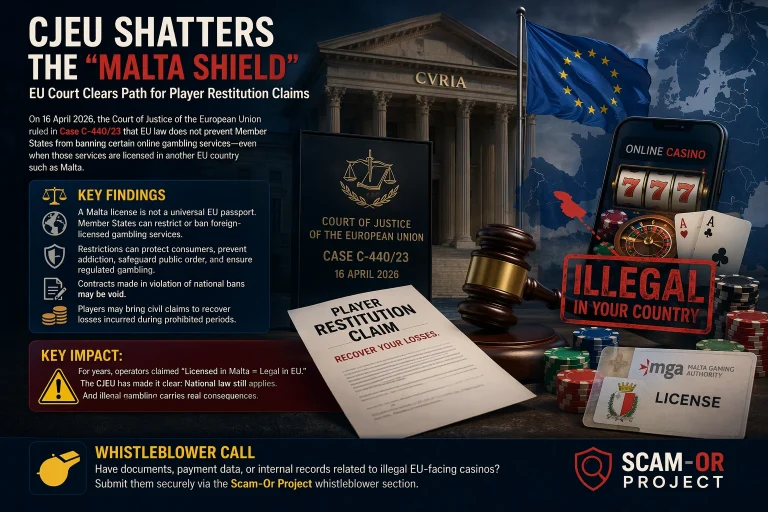
The Court of Justice of the European Union has delivered a decisive ruling that undermines the long-standing cross-border online casino model. In Case C-440/23, involving European Lotto and Betting and Deutsche Lotto- und Sportwetten, the CJEU ruled on 16 April 2026 that EU law does not prevent Member States from banning certain online gambling services—even when those services are licensed in another EU jurisdiction such as Malta.
More critically for the industry, the Court confirmed that such prohibited gambling activities can trigger civil-law consequences. Contracts may be deemed void, and players may pursue recovery of losses under national law. For Malta-licensed operators, this ruling represents a structural crack in their business model.
Key Findings of the CJEU
- EU law does not prohibit Member States from restricting or banning online gambling services licensed in another EU country.
- Such restrictions can legitimately aim to:
- Protect consumers
- Prevent gambling addiction
- Safeguard public order
- Channel gambling into regulated systems
- A later transition to a licensing regime (e.g., Germany’s reform on 1 July 2021) does not invalidate earlier prohibitions.
- Gambling contracts concluded in violation of national bans may be considered void.
- Players may bring civil claims to recover losses incurred during prohibited periods.
- The case originated from a dispute involving Malta-licensed operators offering services in Germany between June 2019 and July 2021.
Compliance Analysis
The “Malta License” Argument Weakens
For years, offshore operators relied on a simple narrative: a Malta license equals EU legitimacy. The CJEU has now dismantled that assumption.
The Court clarified that a license issued in one Member State does not function as a universal EU passport. Gambling regulation remains largely under national control, with no full harmonization across the EU. As a result, countries like Germany retain broad authority to restrict or prohibit certain gambling services.
Bottom line: A Malta license does not override national law.
Case Background: What Was at Stake
The dispute involved:
| Element | Details |
|---|---|
| Operators | European Lotto and Betting Ltd, Deutsche Lotto- und Sportwetten Ltd |
| Licensing Authority | Malta Gaming Authority |
| Market Targeted | Germany |
| Period of Activity | June 2019 – July 2021 |
| Legal Context | German law prohibited certain online gambling products during this period |
A German player incurred losses using these services and later sought restitution. The case reached a Maltese court, which referred key legal questions to the CJEU—specifically whether EU law blocked Germany’s prohibition and its civil consequences.
The Court’s response was clear: it does not.
The Court’s Reasoning
The CJEU accepted established regulatory concerns surrounding online gambling:
- Continuous availability and accessibility
- Lack of social oversight
- Increased risk of excessive play
- Higher vulnerability for younger users
Based on these risks, Member States are justified in restricting gambling markets and directing activity into controlled environments.
This directly challenges the argument that national restrictions are inherently protectionist or incompatible with EU freedoms.
The Critical Turning Point: Player Restitution
The most impactful element of the ruling is the confirmation that:
- Gambling contracts violating national bans may be declared void
- Players may sue to recover their losses
While the exact legal mechanisms depend on national law, the broader implication is clear: EU law no longer shields operators from restitution claims.
Operators can no longer rely on EU principles to dismiss such lawsuits outright.
Germany’s 2021 Reform Does Not Apply Retroactively
The Court also rejected the argument that Germany’s shift to a regulated licensing regime (effective 1 July 2021) invalidates earlier restrictions.
This means:
- Pre-2021 operations remain legally exposed
- Operators cannot retroactively legitimize past activities
- Claims tied to the earlier prohibition period remain enforceable
What This Means for Players
The ruling does not guarantee automatic refunds. However, it significantly strengthens the legal position of players:
- If the gambling activity was prohibited in their country
- And national law allows contract nullity and restitution
→ Then EU law will not block their claims.
Additionally, the Court dismissed the idea that simply using a foreign-licensed platform constitutes abuse of rights.
In practical terms: players now have a stronger legal basis to recover losses from illegal operators.
Wider Impact: Beyond Casinos
The consequences extend beyond operators themselves.
If gambling contracts are void and unlawful, the entire ecosystem becomes riskier:
- Payment processors
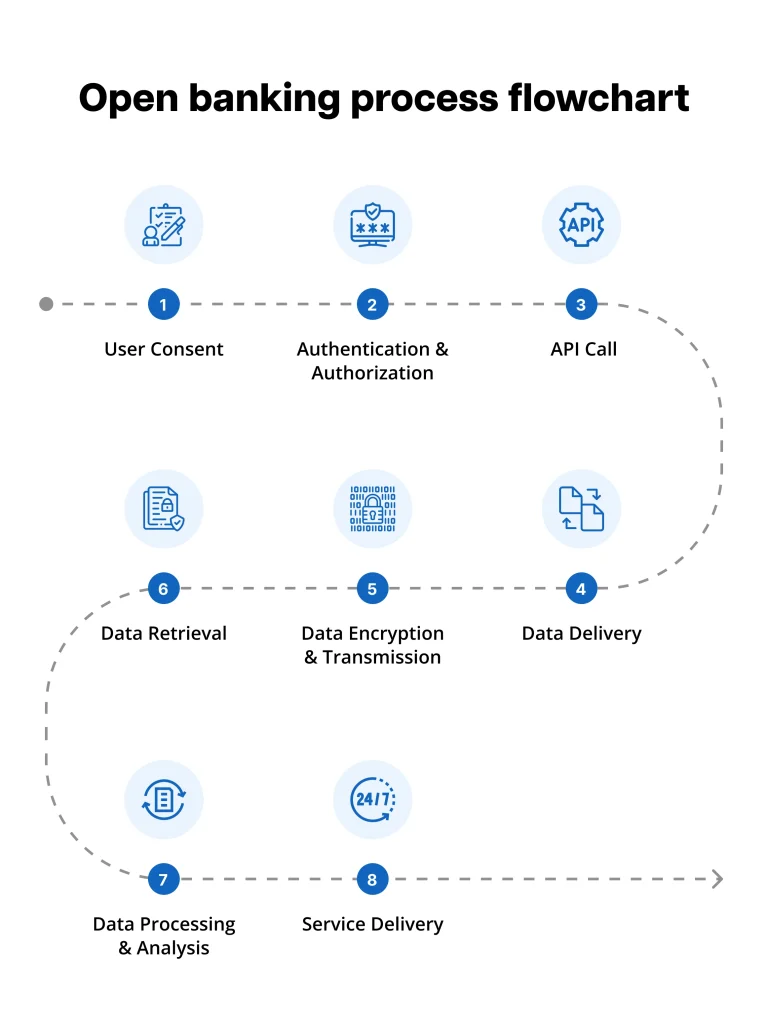
- Open-banking providers
- Affiliate networks
- Merchant acquirers
- Payment agents
- KYC providers
- Platform intermediaries
While not explicitly stated by the Court, this conclusion follows logically from the ruling’s framework.
For ongoing investigations by Scam-Or Project, this reinforces a key point: once the operator’s legal standing weakens, the associated payment infrastructure is also exposed.
Scam-Or Project Take
This judgment represents a major setback for the Malta-based casino defense model.
The CJEU did not eliminate cross-border gambling—but it dismantled the assumption that a Malta license automatically legitimizes EU-wide operations. More importantly, it equips players and legal practitioners with a stronger foundation for restitution claims.
For years, offshore operators promoted a simple narrative: licensed in Malta equals legal across Europe. The Court has now made it clear that this is not how EU law works.
National regulations still apply—and they carry real consequences.
Conclusion
The CJEU’s ruling in Case C-440/23 is a landmark decision in the EU gambling landscape. It confirms that:
- Member States can restrict or ban foreign-licensed gambling services
- Civil consequences of such bans remain valid
- Players may pursue recovery of losses under national law
For operators, this is a direct warning.
For players, it is a strategic opportunity.
For the broader payment and compliance ecosystem, it signals expanding legal risk.
Whistleblower Call
If you possess internal documents, legal assessments, payment routing data, onboarding records, or compliance materials related to illegal EU-facing online casinos, submit them securely via the Scam-Or Project whistleblower section.