
Lithuanian Crypto Gateway utPay Suspends Operations Amid MiCA Pressure

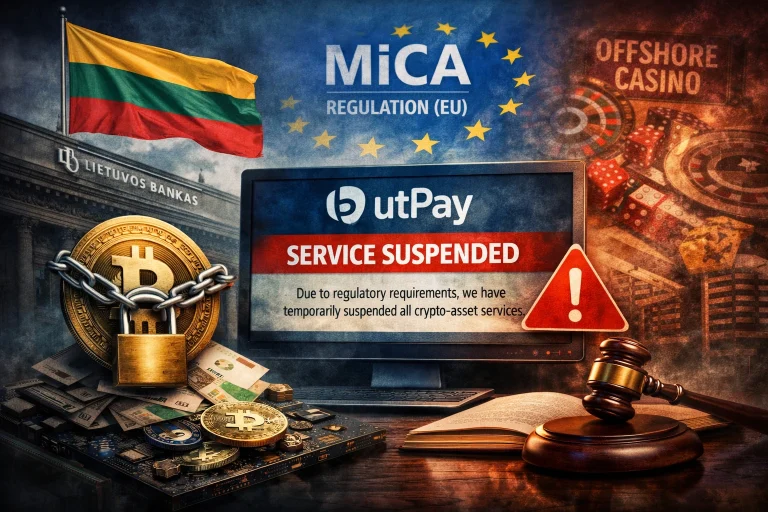
Lithuanian virtual asset service provider UTRG UAB, operating under the brand utPay, has halted all crypto-asset services effective January 1, 2026. The company cited the need to align with Regulation (EU) 2023/1114 on Markets in Crypto-Assets (MiCA) and stated it is awaiting authorization from the Bank of Lithuania.
The suspension follows extensive investigative reporting by Scam-Or Project, which previously documented utPay’s alleged role as a principal payment facilitator for a large network of offshore casinos targeting German and other European players through deceptive “fake bank transfer” structures.
With approximately 720,000 monthly visits—87% reportedly originating from Germany—and an estimated 58% of traffic linked to unlicensed gambling operators, including entities associated with the collapsed Rabidi Group and the Marshall Islands-based NovaForge Ltd, the abrupt shutdown raises serious regulatory and legal questions.
The Suspension: End of an Operational Model
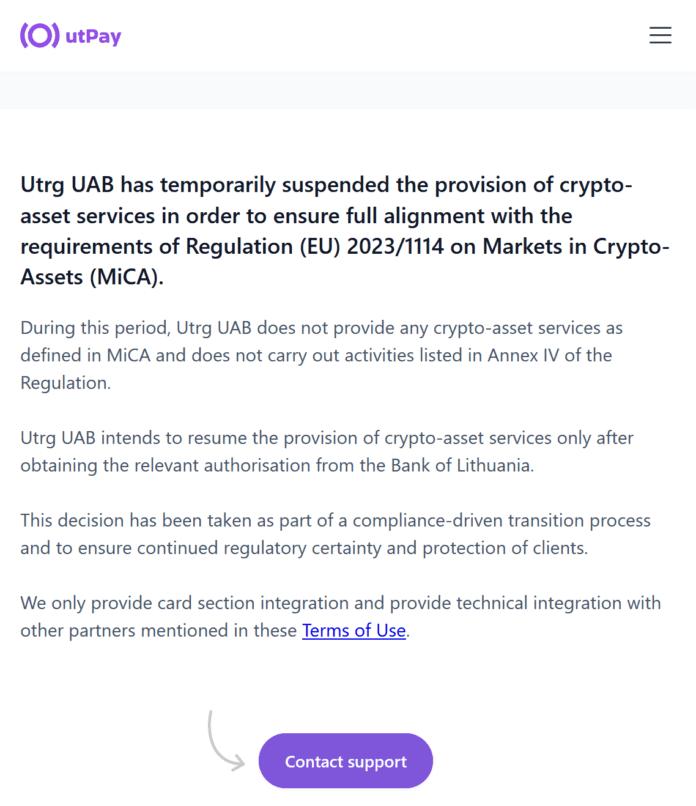
On January 1, 2026, visitors to utpay.io were informed that UTRG UAB had suspended all crypto-asset services. The company declared that it no longer provides crypto-asset services as defined under MiCA and does not perform activities listed in Annex IV of the Regulation. It now claims to offer only technical integrations such as card section integration and partnerships with third-party providers.
This announcement followed Lithuania’s strict MiCA transition deadline of December 31, 2025. Unlike several other EU Member States that extended transition periods into mid-2026, Lithuania enforced one of the earliest deadlines.
The Bank of Lithuania had repeatedly warned throughout 2025 that any crypto-asset services provided without MiCA authorization after January 1, 2026, would be considered illegal financial activity. Under Lithuanian law, penalties for unlicensed financial services may include fines, restriction of liberty, or imprisonment of up to four years—extended to seven years in cases involving money laundering.
As of mid-2025:
| Indicator | Data |
|---|---|
| Registered Lithuanian VASPs | ~370 |
| Actively operating | ~120 |
| MiCA applications submitted | ~30 |
| Applications under active review | ~10 |
UTRG UAB, led by CEO Andrius Atkočaitis, did not publicly confirm whether a MiCA application was submitted. When the regulatory deadline arrived, utPay’s crypto services ceased.
The Business Structure: “Fake Bank Transfer” Mechanism
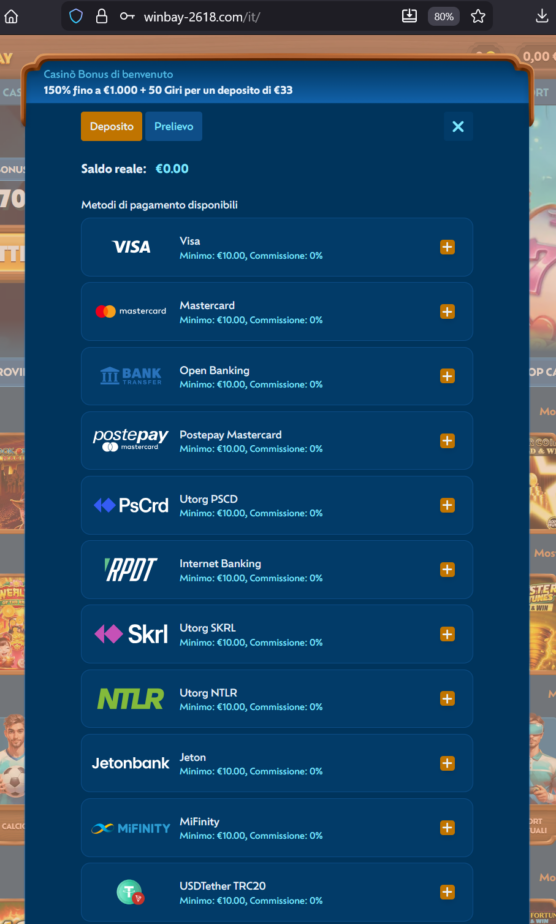
Investigations by Scam-Or Project throughout 2024–2025 described a transaction model allegedly used by utPay in casino integrations.
How the Flow Worked
-
Front-End Presentation
On casino checkout pages, utPay was displayed as: - “Banküberweisung”
- “Echtzeit-Überweisung”
- Brand names such as Deutsche Postbank, Sparkasse, or Deutsche Bank
-
Hidden Crypto Purchase
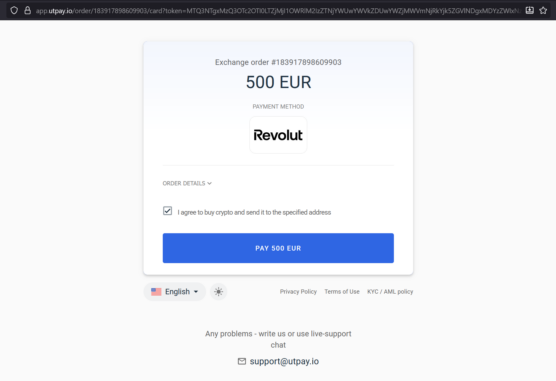
Instead of a traditional bank transfer, users were routed to purchase cryptocurrency (typically USDC or USDT) from UTRG UAB in its capacity as a virtual currency exchange operator. -
Automatic Routing via ChainValley
The crypto was transferred through app.chainvalley.pro, functioning as a technical interface between UTRG’s exchange service and casino wallets. -
Pre-Ticked Consent Line
A pre-selected confirmation stated that users were buying crypto and sending it to a specified address. -
Irreversible Transfer
Funds were delivered directly to wallets controlled by casino operators, eliminating traditional chargeback options.
Why This Model Mattered in Germany
Germany’s Glücksspielstaatsvertrag 2021 (GlüStV 2021) established a highly restrictive online gambling regime under supervision of the Gemeinsame Glücksspielbehörde der Länder (GGL).
Key restrictions include:
- €1,000 monthly deposit cap per player
- €1 maximum stake per spin
- Ban on live dealer games
- Centralized player database monitoring
The GGL increasingly relied on payment blocking orders against service providers supporting unlicensed operators. By mid-2025, more than 30 such orders had reportedly been issued.
The alleged utPay structure—categorizing transactions as crypto purchases rather than gambling deposits—may have reduced the effectiveness of payment blocking enforcement. By operating through Lithuania and utilizing crypto conversion, the system allegedly provided a form of jurisdictional and technical arbitrage.
Casino Network Connections
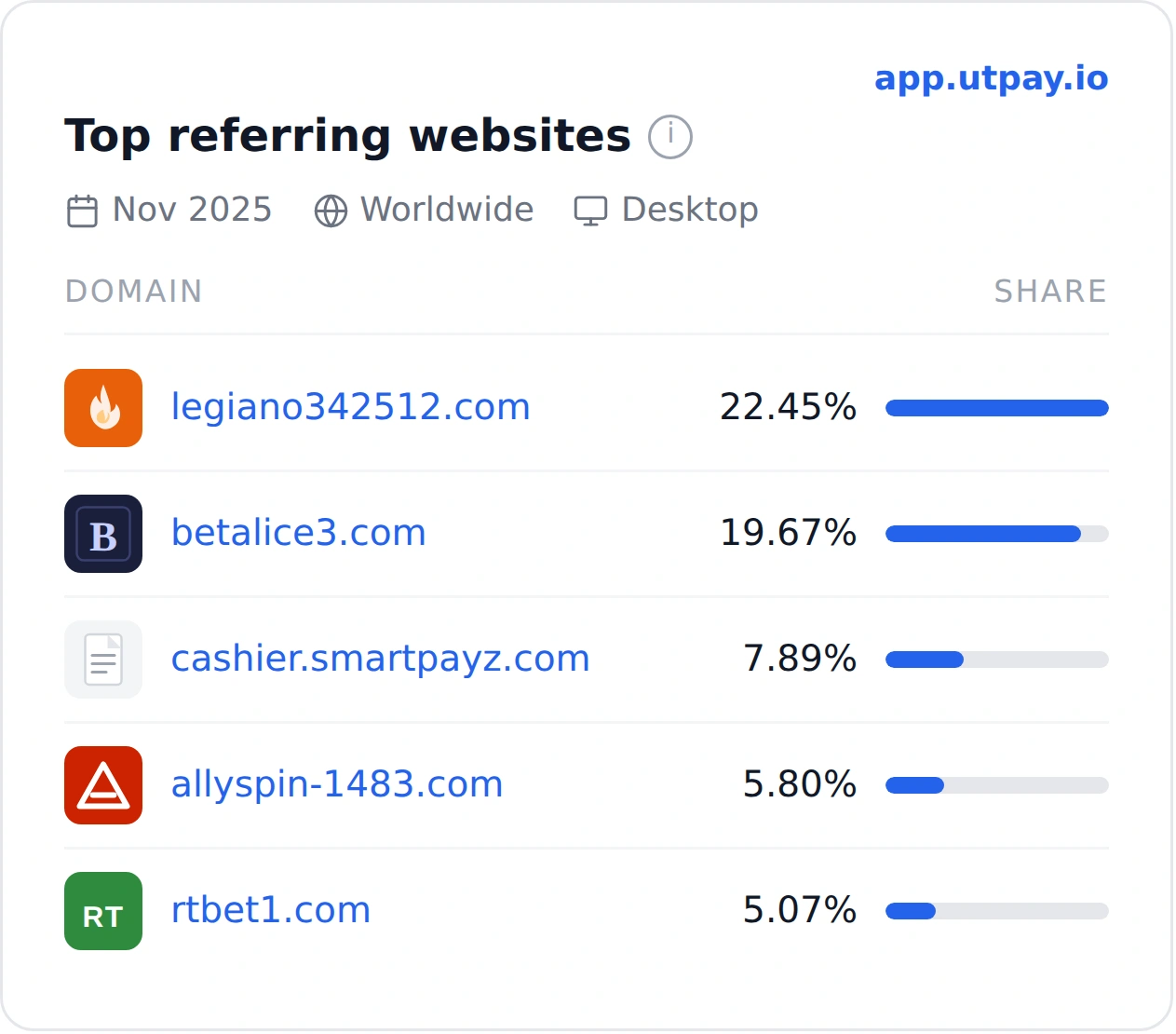
Traffic analysis indicated strong concentration among offshore operators. Top referral sources reportedly included:
| Casino | Alleged Operator | Jurisdiction | Share of Referral Traffic |
|---|---|---|---|
| Legiano | NovaForge Ltd | Marshall Islands (PAGCOR license) | 21% |
| BetAlice | NovaForge Ltd | Marshall Islands | 21% |
| Betsolino | Betsolino Limited | UK registration (Curaçao claim) | Significant |
| Wazamba | Formerly Rabidi N.V. | Curaçao | Connected |
The UK Gambling Commission reportedly confirmed no license exists for Betsolino Limited in the UK.
The reliance on offshore operators created a business concentration risk. If regulatory scrutiny intensified against those merchants, the payment gateway’s exposure would increase correspondingly.
MiCA Compliance Challenges
MiCA imposes extensive requirements on Crypto-Asset Service Providers (CASPs):
- Governance and fit-and-proper management
- Capital adequacy
- AML/CFT compliance
- Consumer protection standards
- Market abuse prevention
If UTRG UAB submitted a MiCA application, the Bank of Lithuania would assess not only forward-looking compliance but also historical operational conduct.
Given Lithuania’s declared intention not to become a regulatory haven and its enforcement stance, authorization under MiCA is far from guaranteed for applicants with controversial business models.
Broader Regulatory Context
Lithuania’s crypto landscape has tightened significantly:
- Early reputation as crypto-friendly
- Shift toward strict compliance posture
- Criminal liability for non-compliance
Even major players such as Bifinity UAB, linked to Binance, reportedly faced MiCA authorization challenges despite substantial tax contributions.
The regulatory environment now prioritizes substantive compliance over prior registration status.
Legal and Financial Exposure
UTRG UAB potentially faces several layers of risk:
-
Administrative and Criminal Exposure
If crypto services were provided post-deadline without authorization. -
Cross-Border Cooperation
German authorities, active in gambling enforcement, may seek cooperation via EU channels. -
Civil Litigation Risk
European courts have increasingly allowed player recovery claims against facilitators of illegal gambling operations. -
Reputational Impact
Public investigative reporting has significantly associated utPay with offshore gambling networks.
Conclusion: A Structural Turning Point
The January 1, 2026 suspension of utPay’s crypto services appears to reflect deeper structural incompatibility between its historical operating model and the regulatory expectations under MiCA.
Key documented patterns include:
- Heavy reliance on German traffic (approx. 87%)
- Significant exposure to offshore gambling operators
- Crypto-based conversion mechanisms integrated into gambling deposits
- Regulatory arbitrage between jurisdictions
Lithuania’s strict MiCA transition deadline forced binary choices: secure authorization under heightened scrutiny or suspend operations.
Whether utPay will obtain MiCA authorization remains uncertain. What is clear is that the regulatory environment across the EU—particularly regarding crypto-asset services intersecting with gambling—has entered a far stricter enforcement phase.
Call for Information
Scam-Or Project continues to examine the activities of UTRG UAB (utPay) and its links to the NovaForge and Rabidi casino networks. Individuals with relevant documentation or insider information may contact the Scam-Or Project whistleblower section confidentially.