
MEXC Under Scrutiny: $160K Freeze, Pre-Trial Demand, and a Cross-Border Entity Puzzle

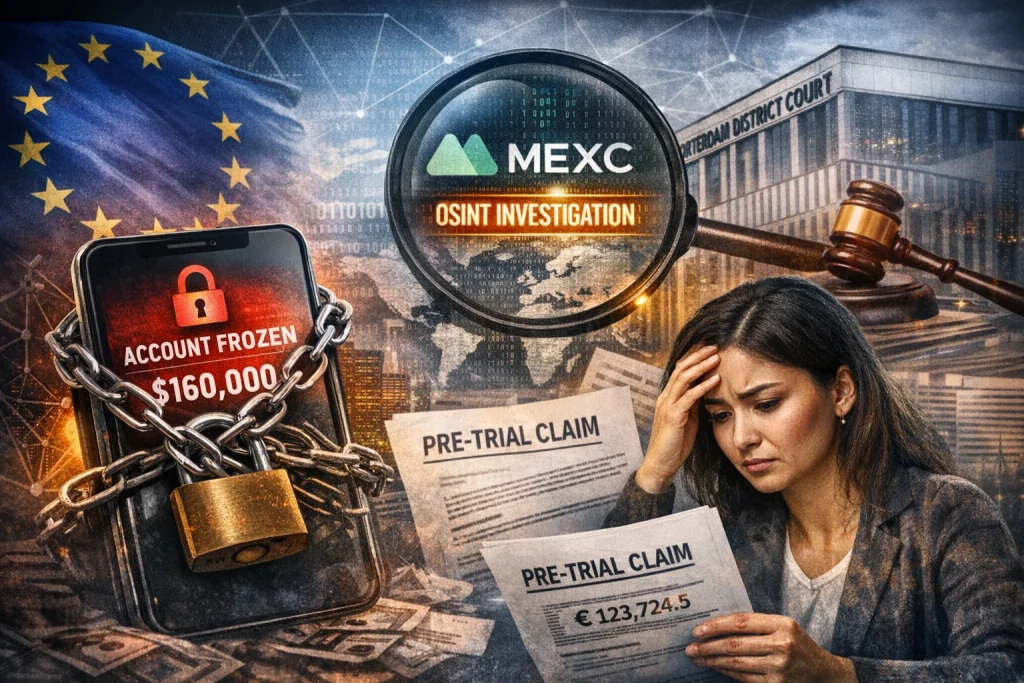
A Kazakhstan-based customer alleges that MEXC froze—and effectively extinguished access to—crypto assets worth approximately $160,000, citing “high-risk activity” and AML obligations while declining to provide case-specific reasoning.
Scam-Or Project examined the claimant’s formal pre-trial demand and a separately commissioned OSINT report that points to shifting corporate touchpoints across jurisdictions, with an Estonian company repeatedly emerging as a possible accountability node. The core issue for customers and regulators: is compliance being invoked as a shield for opaque asset deprivation while legal responsibility is dispersed across a changing entity landscape?
Executive Snapshot
Claimant materials (pre-trial demand):
- Account allegedly blocked on 27 June 2024.
- Withdrawals restricted; login initially functional.
- Re-verification required (passport photo, selfie, handwritten note).
- Account later declared permanently blocked; reasons not disclosed.
- Formal demand dated 16 July 2024 sought restoration within 30 days, with litigation threatened.
Platform response (per claimant):
- Standardized references to “high-risk activities” and “AML obligations.”
- Refusal to disclose details or evidence.
- Indefinite restriction language (“until further notice”).
OSINT dossier (allegations subject to verification):
- Earlier corporate entities dissolved in prior hubs.
- New operational touchpoints surfaced in other jurisdictions.
- Rotterdam District Court reportedly ordered an Estonian-linked entity to pay EUR 123,724.50 in a frozen-funds dispute (late 2024).
- Potential EU accountability vector through Estonia or Lithuania.
Governance signal:
Asset immobilization + non-disclosure + entity opacity = elevated consumer-protection risk, especially where the exchange continues to market itself as “top-tier.”
The Customer’s Account of Events
The claimant states she held USDT and ETH on MEXC with an estimated value near $160,000 (based on her statement and prevailing rates).
According to the pre-trial demand:
- 27 June 2024: Account (UID listed in the letter) was blocked.
- Withdrawals were restricted; support requested enhanced verification.
- After submission, the account was declared permanently blocked.
- Funds became inaccessible; no concrete rationale provided.
- A 30-day deadline was issued for reinstatement before court action.
The dispute does not center on the existence of AML controls. It centers on the alleged absence of procedural transparency once customer assets are effectively frozen without explanation or remedy.
Compliance Lens: When AML Lacks Procedural Clarity
In regulated environments, AML-based restrictions typically involve:
- A documented case rationale (even if partially redacted),
- Defined escalation or appeal channels,
- Clear scope and duration of restrictions,
- Separation between investigative controls and permanent asset loss.
The claimant alleges she received none of these safeguards—only a permanent restriction and template responses.
If accurate, that would raise governance concerns beyond routine compliance enforcement.
The OSINT Dossier (Murkledove Intelligence, Feb 2025)
Scam-Or Project reviewed an OSINT report prepared by Murkledove Intelligence. The document adopts a forceful tone and must be treated as investigatory lead material rather than adjudicated fact. Nonetheless, it outlines several verifiable threads.
Core Allegation
The report claims that since 2023:
- Certain MEXC entities in earlier jurisdictions were dissolved or struck off.
- Operational continuity persisted via alternative entities.
- Claimants seeking redress encounter jurisdictional friction.
- Corporate transitions create ambiguity over legal responsibility.
The “EU Anchor” Narrative: MEXC Estonia OÜ
The dossier repeatedly references MEXC Estonia OÜ (Estonia) as a potential liability touchpoint.
Allegations include:
- Active Estonian registration.
- Public narratives tying the entity to licensing themes.
- Representatives disputing operational linkage.
- A reported Rotterdam District Court ruling ordering payment of EUR 123,724.50 in a frozen-funds dispute involving the Estonian entity.
A redacted court decision referenced in the workflow suggests the claim is verifiable via Dutch court records.
Individuals named by OSINT:
- Yichen Peng
- Ljudmila Budnikova
- Bing Li
- Hongjiang Liu
App Operator & US Nexus
The dossier further alleges:
- MEXC Fintech Inc (United States) is designated developer/operator of the MEXC mobile app on major app marketplaces.
- The entity previously operated as Snowbird Connect Inc, allegedly acquired by MEXC.
- “App operator” designation may form a regulatory or enforcement nexus where exchange licensing claims are contested.
OSINT Entity Matrix (Allegations Overview)
| Brand / Product | Legal Entity (as alleged) | Jurisdiction | Compliance Angle | Individuals Named |
|---|---|---|---|---|
| MEXC exchange | MEXC Global Ltd (DISSOLVED Aug 2023) | Seychelles | Dissolution may complicate claimant recourse | Xin Hu, John Chen |
| Licensing narrative | MEXC Estonia OÜ | Estonia | Alleged EU accountability route; Dutch court reference | Yichen Peng; Ljudmila Budnikova; Bing Li; Hongjiang Liu |
| EU touchpoint | Oceanblue Fintech UAB (formerly MEXC Lithuania UAB), Co. No. 306111081 | Lithuania | Potential contracting/accountability node | Febvi Aldana Dela Calzada; Xinran Guo |
| Swiss presence | GIDA Technology AG (f/k/a MEXC Switzerland AG) | Switzerland | Corporate continuity layer | Luo Tao; Hongxiu Liu |
| Mobile app ops | MEXC Fintech Inc | United States | Developer/operator designation | — |
| Historic app dev | Snowbird Connect Inc | United States | Alleged predecessor/acquired entity | — |
| UK structure | MEXC UK Limited | United Kingdom | Structural footprint | — |
| Token entities | MXC Foundation GmbH; MXC China Limited | Germany / China | Token-related narratives | — |
| Legal counsel | Brandl Talos | Austria | Representation in dispute contexts | — |
| FIAT rail | OSL Pay S.R.L. | Italy | Payment processing | Orlando Merone; Teo Jing Wei |
| FIAT rail | Heuro SAS | France | Payment processing | Chuan Chen; Haixiang Li |
Pattern Analysis
The materials reviewed suggest a recurring structure:
- Account freeze
- Template AML explanation
- Refusal to disclose specifics
- Cross-border entity fragmentation
Even where compliance enforcement is legitimate, regulated markets expect proportional transparency and identifiable accountability pathways. AML controls are not designed to nullify procedural fairness or permanently deprive customers of assets without clarity.
Structural Architecture Questions
The OSINT materials describe a multi-jurisdictional configuration:
- Delaware app operator (MEXC Fintech Inc)
- Dissolved Seychelles entity (MEXC Global Ltd)
- Estonian regulatory thread
- Lithuanian touchpoint (Oceanblue Fintech UAB)
- Swiss entity (GIDA Technology AG)
- UK presence (MEXC UK Limited)
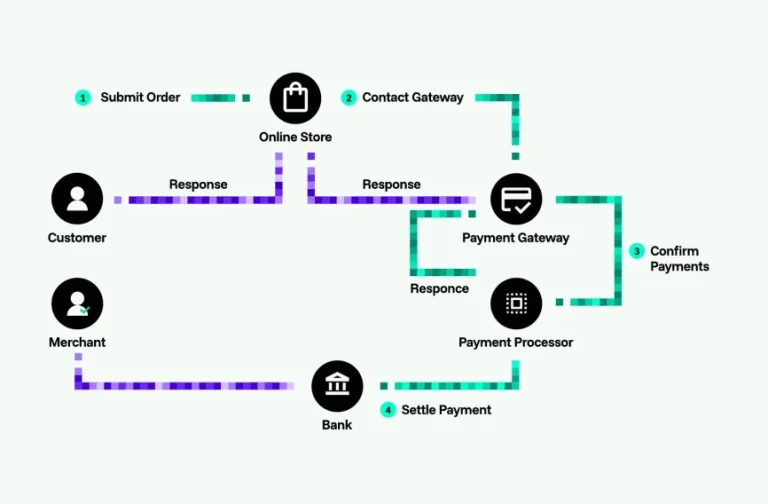
- FIAT processing via OSL Pay S.R.L. and Heuro SAS
Whether this reflects standard global scaling—or regulatory dispersion—requires independent verification.
Call for Information
If you have experienced:
- Frozen or liquidated MEXC accounts,
- Permanent restrictions without explanation,
- Delays or refusal of asset restoration,
or if you possess insider knowledge from:
- OSL Pay S.R.L.
- Heuro SAS
- Finetix Ltd Limited
- Paytend
particularly regarding automated “high-risk” triggers or liquidation protocols,
you may submit documentation via the Scam-Or Project whistleblower section.
Transparent compliance frameworks strengthen markets. Opaque asset immobilization undermines trust.