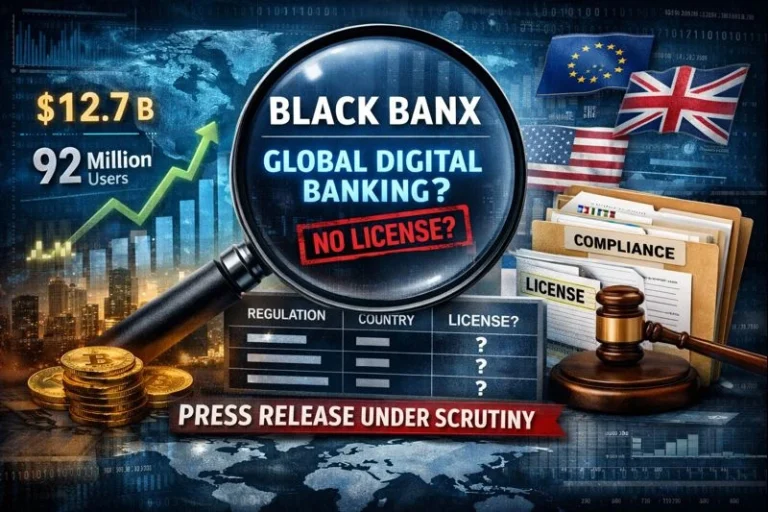

The Fintech Mogul Under Fire: What Turkish Authorities and OCCRP Found Inside Ozan Özerk’s Payment Network

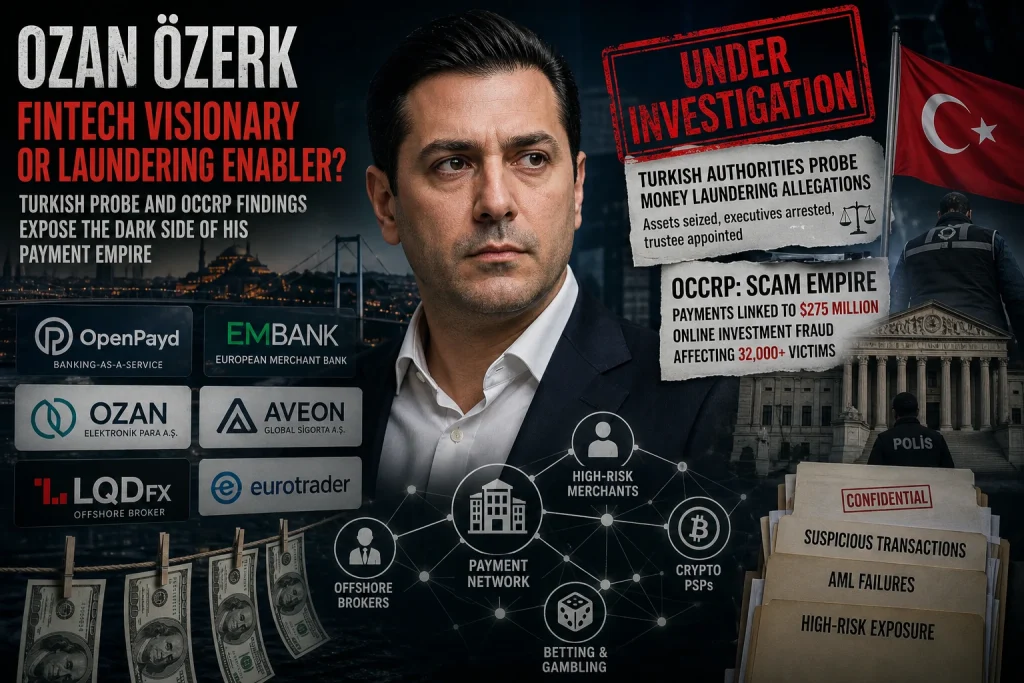
Turkish authorities have launched a money-laundering probe into companies connected to Cypriot-Norwegian fintech entrepreneur Ozan Özerk. His business network includes several regulated payment and banking institutions that have previously been linked to a global online fraud ecosystem uncovered by OCCRP.
While Özerk actively promotes himself as an innovator in cross-border payments and compliance, ongoing coverage by Scam-Or Project alongside recent OCCRP findings raises a critical question: does this carefully curated public image conceal a payment infrastructure repeatedly appearing in high-risk and scam-adjacent financial flows?
All individuals and entities mentioned are presumed innocent until proven guilty. The investigations referenced remain ongoing, and some parties deny or challenge the allegations.
Key Findings
- Turkish prosecutors are investigating companies tied to Ozan Elektronik Para A.Ş. and Aveon Global Sigorta A.Ş., both majority-owned by Ozan Özerk, over suspicions they were used to channel illicit funds—primarily from illegal betting—into the financial system.
- Authorities have seized assets totaling tens of millions of Turkish lira, detained multiple individuals, and appointed a court trustee to oversee Ozan Elektronik Para A.Ş., indicating significant regulatory concern.
- OCCRP’s “Scam Empire” investigation revealed that other Özerk-linked entities, including OpenPayd and European Merchant Bank (EMBank), processed transactions tied to a large-scale investment fraud that allegedly defrauded at least 32,000 victims of approximately $275 million.
- Scam-Or Project has for years identified OpenPayd, LQDFX, EuroTrader, and related ventures within the Özerk ecosystem as high-risk financial rails connected to offshore brokers and aggressive investment schemes.
- OpenPayd has already been found liable by Malta’s Financial Arbiter in a case involving an elderly investor whose losses were routed through its virtual IBAN infrastructure.
- At the same time, Özerk has built a strong personal brand through LinkedIn, fintech publications, and corporate profiles, positioning himself as a compliance-focused industry expert.
- Search results increasingly portray Özerk as a fintech commentator rather than an owner of entities involved in investigations, suggesting a deliberate reputation-management strategy.
Quick Reference: Ozan Özerk Ecosystem
| Element | Details |
|---|---|
| Principal | Ozan Özerk (also Ozan Ozerk), Cypriot-Norwegian fintech entrepreneur, former medical doctor |
| Key Entities | OpenPayd (Malta-linked), European Merchant Bank (Lithuania), Ozan Elektronik Para A.Ş. (Turkey), Aveon Global Sigorta A.Ş. (Turkey) |
| Investigation Focus | Alleged laundering of proceeds from illegal betting and other suspicious activities |
| Enforcement Actions | Asset seizures (~72M TRY + ~$9.6M), arrests, detentions, trustee appointment |
| Scam Exposure | OCCRP links OpenPayd and EMBank to $275M fraud affecting 32,000+ victims |
| Broker Links | LQDFX (offshore broker), linked to high-risk PSPs like Confirmo and PayRedeem |
| Narrative Strategy | Public positioning as fintech innovator and compliance expert |
| Risk Themes | AML weaknesses, high-risk merchants, offshore brokerage, regulatory arbitrage |
OCCRP and Turkish Investigations: A Converging Risk Narrative
The OCCRP findings mark a shift from journalistic scrutiny toward formal regulatory and prosecutorial action within Turkey. Authorities allege that Ozan Elektronik Para A.Ş. facilitated the entry of illicit funds—mainly from illegal betting—into the financial system, while Aveon Global Sigorta A.Ş. allegedly masked such proceeds as insurance transactions.
Although Özerk (LinkedIn) himself has not been formally charged, the scale of enforcement actions—including asset seizures and trustee oversight—suggests regulators view these companies as systemic risk channels rather than isolated cases.
Importantly, the Turkish investigation is separate from, but aligned with, OCCRP’s “Scam Empire” project. That investigation documented how payment institutions, including OpenPayd and EMBank, were used to move funds from victims into fraudulent investment platforms. While OCCRP did not establish that these institutions knowingly processed illicit funds, repeated exposure to high-risk flows raises serious compliance concerns under a risk-based AML framework.
Together, these developments point to a financial network that frequently sits at the intersection of regulated fintech and unregulated, high-risk online operations.
Patterns Identified in the Özerk Ecosystem
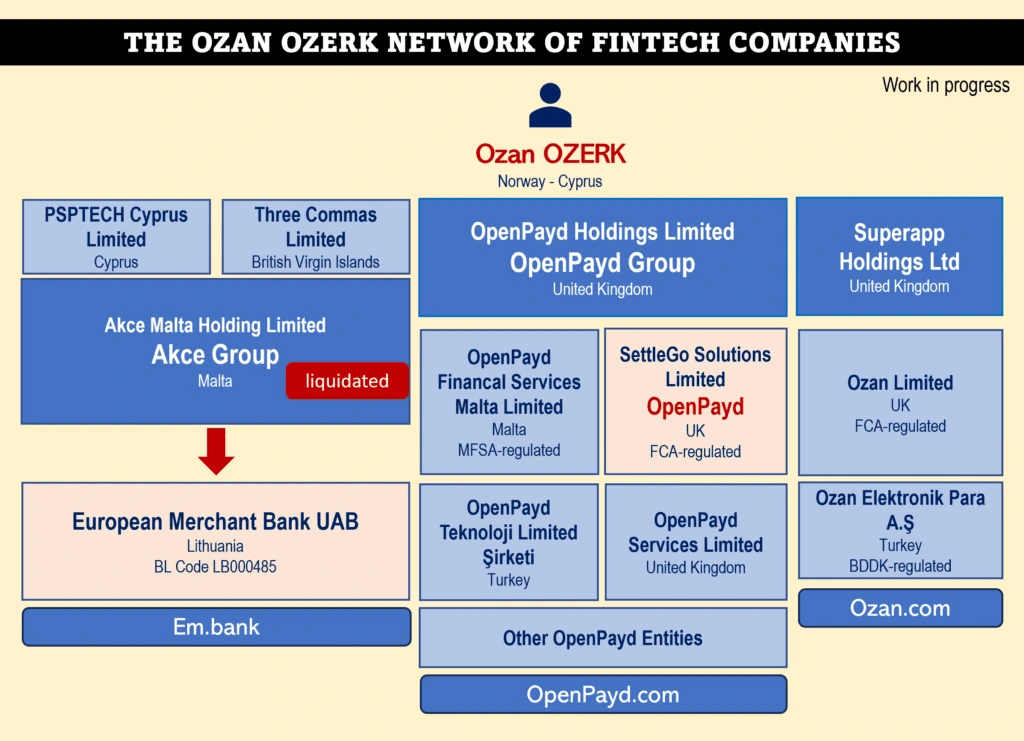
Scam-Or Project has previously outlined recurring structural patterns within Özerk-linked operations:
1. Offshore Brokerage with Regulated Cover
- LQDFX operated offshore while EuroTrader secured CySEC and FCA licenses
- This combination provided a regulatory façade alongside exposure to speculative markets
2. High-Risk Payment Rails
- Payment providers such as Confirmo, PayRedeem, Koinal, and Bitpace appear repeatedly
- These rails support card, crypto, and voucher payments commonly used by gambling and high-risk investment platforms
3. Voucher and Gift Card Layer
- Entities like Giftbull introduce a semi-cash mechanism enabling value transfers into regulated systems
4. Integration with Mainstream Platforms
- Partnerships such as OpenPayd’s infrastructure being used by eToro show how these rails extend into legitimate fintech ecosystems
Viewed collectively, these patterns suggest a scalable infrastructure bridging regulated financial systems and high-risk digital businesses.
Reputation Engineering and SEO Strategy
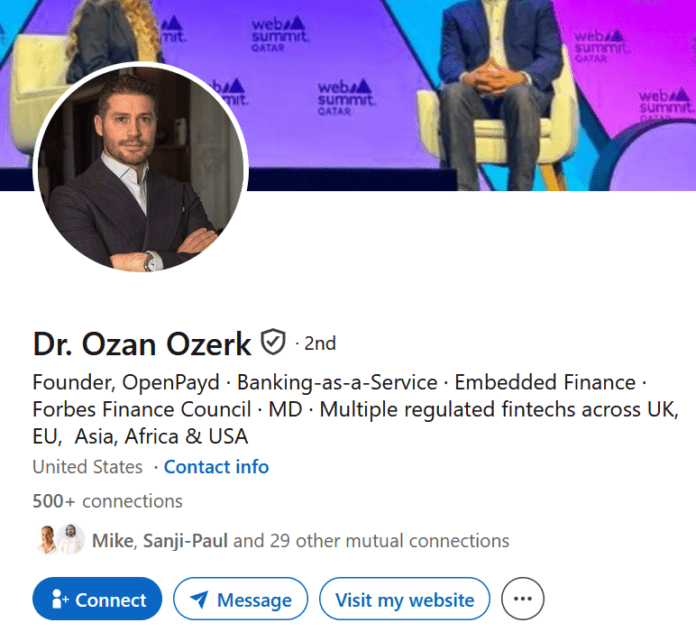
Alongside these operational patterns, a strong reputation-management effort is evident.
Özerk’s public presence highlights:
- Thought-leadership articles on fintech, DeFi, MiCA, and cross-border payments
- Market analyses and LinkedIn posts emphasizing compliance and innovation
- Positioning as a global payments expert and industry visionary
For example, his commentary on cross-border payments markets and rails-agnostic payment systems focuses on efficiency, transparency, and regulatory evolution—topics directly linked to the controversies surrounding his companies, yet presented without reference to them.
Strategic Effects
- Dominates search results with high-authority, positive content
- Reframes perception from “subject of investigations” to “industry expert”
- Strengthens credibility in conferences, media, and partnerships
This creates a narrative inversion: the same figure associated with high-risk payment flows is simultaneously positioned as an authority on preventing such risks.
Compliance and Risk Implications
The Özerk ecosystem highlights structural challenges for regulators and financial institutions.
Key Considerations
- Group-level AML oversight: Entities like OpenPayd, EMBank, Ozan Elektronik Para, and Aveon Global Sigorta should be assessed as a unified risk cluster
- Embedded finance scrutiny: BaaS models and virtual IBAN systems require deeper due diligence
- Substance over narrative: Public positioning must be validated against enforcement data and transaction patterns
- Fit-and-proper standards: Repeated exposure to high-risk schemes raises questions about suitability for regulated roles
For banks and PSP partners, any involvement of Özerk-linked entities should trigger enhanced due diligence, including:
- Merchant risk analysis
- Exposure to high-risk jurisdictions
- Historical complaint and enforcement review
Call for Whistleblowers and Industry Input
Scam-Or Project will continue monitoring the evolution of investigations into the Özerk ecosystem across Turkey, Malta, Lithuania, and other jurisdictions.
Industry participants—including former employees, compliance officers, PSP partners, and affected users—are encouraged to provide information regarding:
- Payment flows involving OpenPayd, EMBank, Ozan Elektronik Para, or Aveon Global Sigorta
- Internal decisions related to onboarding high-risk merchants
- Structures used to route or obscure cross-border transactions
Submissions can be made confidentially via the Scam-Or Project Complaints.
Supporting documentation—such as contracts, communications, payment records, and internal reports—can significantly assist in mapping the full scope of this network and supporting both regulatory action and victim recovery.